Behavior & Training
The relationship between dogs and their owners has evolved dramatically over recent decades, yet confusion about training methods and behavioral science persists. From outdated dominance myths to misunderstood barking patterns, Canadian dog owners face a landscape filled with conflicting advice. Whether you’re navigating the challenges of apartment living in Toronto’s high-rises or managing a high-energy breed through a Vancouver winter, understanding the science behind canine behavior transforms frustration into partnership.
This comprehensive resource explores the foundations of modern dog training and behavior management. You’ll discover why temperament assessment matters more than breed stereotypes, how environmental design prevents problems before they start, and which training principles actually create lasting behavioral change. The goal isn’t quick fixes—it’s building a framework of understanding that applies across every situation you and your dog will encounter together.
Understanding Canine Behavior: Beyond Myths and Misconceptions
The first step toward effective training is dismantling the misconceptions that lead owners astray. Many behavioral challenges stem not from the dog’s failings, but from fundamental misunderstandings about how dogs perceive and process their world.
Why Breed Stereotypes Fail Individual Dogs
Breed-specific legislation across various Canadian municipalities reflects a persistent belief that certain breeds are inherently dangerous. Yet behavioral science consistently demonstrates that individual temperament varies more within breeds than between them. A Labrador Retriever can be nervous and reactive, while a “bully breed” can be remarkably gentle. Assessing each dog objectively—through structured temperament evaluations rather than visual assumptions—provides accurate information that breed labels simply cannot.
The error of relying on appearance becomes particularly problematic in rescue contexts, where mixed-breed dogs are frequently mislabeled based on head shape or body type. These visual assessments mislead adopters and shelter staff alike, creating self-fulfilling prophecies where dogs are treated according to presumed breed characteristics rather than actual behavior.
The Nature Versus Nurture Balance
Genetics provide a starting point—a dog’s threshold for arousal, prey drive intensity, and social tolerance all have hereditary components. But environment and experience shape how these predispositions manifest. A dog genetically inclined toward high arousal can learn impulse control through proper training, while a naturally calm dog can develop anxiety through inconsistent handling or traumatic experiences.
Understanding this interplay prevents the trap of anthropomorphism—projecting human emotions and motivations onto canine behavior. When a dog destroys furniture during owner absence, the behavior likely stems from under-stimulation or separation distress, not spite or revenge. Dogs lack the cognitive framework for such complex emotional manipulation. Recognizing this distinction keeps training approaches grounded in what actually drives canine behavior.
Building the Foundation: Environment and Safe Spaces
Before addressing specific behavioral challenges, the physical environment must support success. Dogs are spatial learners who form strong associations with their surroundings. Optimizing these spaces—particularly for high-energy or anxious dogs—prevents countless problems while supporting training efforts.
The Psychology of Crate Training
Despite lingering controversy, crate training remains one of the most effective management tools available. The key lies in understanding that dogs are den animals who naturally seek enclosed spaces when overwhelmed or tired. A properly introduced crate becomes a genuine safe haven, not a punishment zone.
The choice between plastic and wire crates depends on your dog’s temperament and your home environment. Wire crates offer better ventilation—crucial during humid Canadian summers—and visual openness for dogs who want to observe their surroundings. Plastic crates provide more den-like enclosure, beneficial for anxious dogs who need visual barriers to relax. Position the crate in a low-traffic area where the dog can retreat without being isolated from family activity.
Optimizing for High-Drive Dogs
High-drive dogs—those bred for intensive work like herding, hunting, or protection—require environmental enrichment that goes beyond a backyard and daily walk. In urban Canadian settings where off-leash space is limited, this means incorporating:
- Puzzle feeders and scent work activities that provide mental stimulation equivalent to physical exercise
- Rotating toy access to maintain novelty and interest
- Designated digging or shredding zones that satisfy natural urges within acceptable boundaries
- Strategic use of calming tools like white noise to manage arousal levels in high-stimulus environments
The error many owners make is forcing interaction when the dog signals a need for space. Teaching children and visitors to recognize and respect these signals prevents stress accumulation that eventually manifests as behavioral problems. Quality bedding optimized for joint support becomes particularly important for these active dogs, preventing physical discomfort that can shorten patience and increase reactivity.
Modern Leadership: Moving Past Dominance Theory
Perhaps no area of dog training has undergone more dramatic revision than our understanding of the human-dog relationship. The dominance model, based on flawed wolf pack studies, has been thoroughly debunked by modern ethology. Yet its influence persists, leading to training methods that damage trust and create fear-based compliance rather than genuine cooperation.
Why the Wolf Pack Myth Fails Domestic Dogs
The original wolf studies that spawned dominance theory were conducted on captive wolves from different packs—an artificial scenario that created abnormal competitive dynamics. Wild wolf packs are actually family units led by breeding pairs, where cooperation far outweighs competition. Even if the model were accurate for wolves, domestic dogs diverged from their wild ancestors thousands of years ago, developing entirely different social structures oriented around human partnership.
Techniques like the “alpha roll”—forcibly flipping a dog onto its back—carry significant risk of injury and erode the trust necessary for effective training. Dogs who submit to such handling aren’t showing respect; they’re demonstrating fear or learned helplessness.
Building Bond Through Agency
Modern training recognizes that dogs trained through choice and agency develop stronger problem-solving abilities and more reliable behavior than those trained through compulsion. This doesn’t mean permissiveness—boundaries and structure remain essential. But leadership comes from being a reliable source of resources, safety, and clear communication rather than physical intimidation.
The distinction between respect and fear becomes apparent in stress situations. A dog who respects their handler will look to them for guidance when uncertain. A dog who fears their handler will shut down, flee, or defensively aggress when stressed. Only the former creates the partnership most Canadian owners seek.
Training Principles That Work: Consistency and Communication
Effective training isn’t about finding the perfect technique—it’s about understanding the principles that make any technique work. These fundamentals apply whether you’re teaching basic obedience, addressing behavioral problems, or building advanced skills.
Why Consistency Beats Intensity
Many owners approach training with sporadic intensity: long sessions when motivated, then nothing for days. This pattern actively undermines learning. Dogs learn through repeated associations and predictable consequences, which require consistency over time. Five minutes of daily practice produces dramatically better results than an hour once weekly.
This principle extends to household rules. When family members apply different standards—one person allowing couch access while another forbids it—the dog receives contradictory information that prevents reliable behavioral patterns from forming. Aligning family methods requires communication among humans before expecting clarity from the dog.
Timing Feedback Effectively
The window for reinforcement or correction is approximately one to three seconds. Feedback delivered outside this window associates with whatever the dog is doing at that moment, not the behavior you intended to address. This explains why punishing a dog for a mess discovered hours later accomplishes nothing except creating confusion and anxiety.
The treats versus praise debate misses this crucial timing principle. Both can be effective rewards, but treats offer faster delivery and clearer communication during initial learning. Praise becomes more effective once the dog understands which behavior earns it. Many successful trainers use both, fading treat frequency as behaviors become reliable while maintaining verbal reinforcement.
The error of emotional projection—interpreting training struggles as personal rejection or deliberate defiance—leads owners to deliver feedback based on their frustration rather than the dog’s actual learning needs. When a recall cue stops working, the problem typically isn’t defiance; it’s that the cue has been “poisoned” through inconsistent reinforcement or use in situations beyond the dog’s current skill level.
Managing Common Challenges: From Barking to Reactivity
Certain behavioral challenges appear with remarkable consistency, particularly among Canadian urban dog owners. Understanding the underlying motivations behind these behaviors transforms them from frustrating problems into solvable puzzles.
Decoding Barking in High-Density Living
Dogs living in condominiums and apartments face unique challenges. Hallway noise triggers territorial barking because the dog perceives these sounds as intrusions into their space, yet can’t visually assess the “threat.” Strategic use of white noise machines masks these auditory triggers, while training the “speak” command paradoxically gives you a pathway to teaching “quiet.”
Tools like citronella collars might suppress barking symptoms temporarily, but they don’t address the underlying arousal or anxiety driving the behavior. Worse, they risk reinforcing the fear if the dog associates the correction with the trigger rather than their own vocalization. Proper training takes longer but creates lasting behavioral change rather than temporary suppression.
Recall Training in High-Distraction Areas
The frustration of a dog who ignores recall around wildlife or other dogs reflects a fundamental reality: prey drive can override food motivation in dogs bred for hunting or chasing. Reliable recall requires building a reinforcement history so strong that returning to you becomes more rewarding than pursuing the distraction.
Long lines provide safety during this training process, allowing practice in realistic environments without risking loss of the dog. The choice between whistle and voice cues matters less than consistency; whistles carry farther and aren’t subject to emotional variation, but voice allows for more nuanced communication. Regular “check-ins”—rewarding the dog for periodically orienting toward you even without a recall cue—build the foundation for reliable response when you actually need it.
Calming Reactive Dogs Through Scent Work
Recent research confirms what trainers have observed: sniffing activities lower canine heart rate and cortisol levels. “Sniffaris”—walks where the dog directs the route based on scent interest—provide both mental stimulation and nervous system regulation. For reactive dogs who struggle with traditional walks, this approach redirects focus from environmental triggers to ground-based scent investigation.
Introducing birch oil or food-based scent detection as a structured activity builds drive and control simultaneously. The dog learns to search with intensity while maintaining enough impulse control to work methodically. Timing the search duration prevents frustration while building stamina. The risk of contamination—accidentally rewarding incorrect scent sources—requires careful setup but doesn’t outweigh the benefits for dogs who need calming activities that still satisfy their working drives.
Multi-Dog Households: Harmony Through Understanding
Managing multiple dogs adds layers of complexity that single-dog training doesn’t address. Understanding canine social dynamics—and your role in managing them—prevents conflicts while allowing healthy relationships to develop.
Same-sex aggression occurs more frequently than opposite-sex conflict because dogs of the same sex may compete for similar social resources. This doesn’t mean same-sex pairs are doomed, but it requires awareness during introductions and ongoing management. Neutral territory introductions, beginning with parallel walking rather than face-to-face meetings, allow dogs to acclimate to each other’s presence without the pressure of direct interaction.
The error of immediate sharing—expecting new dogs to immediately share toys, beds, or attention—creates unnecessary competition. Initially providing separate resources and controlling access prevents resource guarding from developing. The “freedom” phase, where dogs have unsupervised access to each other, should be timed based on observed behavior rather than arbitrary schedules. Some pairs reach this point within days; others require weeks of managed interaction.
Multi-dog dynamics aren’t about establishing dominance hierarchies in your home—they’re about managing resources and preventing rehearsal of unwanted behaviors while healthy relationships develop naturally. Your role is environmental manager and conflict preventer, not pack leader in the outdated sense.
Building Drive and Control: The Foundation of Advanced Work
For owners interested in dog sports, working roles, or simply channeling a high-energy dog’s intensity productively, building both drive and control creates a dog who can work with enthusiasm while maintaining responsiveness.
Tug play, often incorrectly feared as aggression-building, actually serves as an ideal training tool. It allows you to build intensity, practice impulse control through “drop it” cues, and reward the dog with an activity they find inherently reinforcing. The choice between French linen and jute tugs matters primarily for durability and grip characteristics; both work effectively if sized appropriately for your dog.
The risk of neck injury from tug play is real but easily prevented. Avoid vertical tugging that lifts the dog’s front feet from the ground, and teach the dog to release on cue rather than engaging in sustained tug-of-war contests. Timing the start and stop of play—beginning while the dog is still eager rather than continuing until exhaustion—builds anticipation and maintains engagement across training sessions.
These same principles apply whether you’re building drive for competitive obedience, protection sports, or simply creating a dog who finds training sessions more exciting than environmental distractions. The combination of high drive with high control defines truly trained working dogs, regardless of the specific work they perform.
The foundations explored here—understanding behavior scientifically, building appropriate environments, applying consistent training principles, and managing common challenges—form the framework for successful dog ownership. Each topic introduced connects to deeper knowledge available through focused study. Whether you’re troubleshooting a specific problem or building skills from the ground up, these evidence-based approaches provide reliable pathways forward. The investment in understanding how dogs actually learn and what drives their behavior pays dividends throughout your years together.

Calming Your Reactive Dog on Walks: A Guide to Therapeutic Nose Work
Nose work is more than a game; it’s a physiological tool that actively lowers your reactive dog’s stress by engaging their parasympathetic nervous system. Focused sniffing is proven to lower heart rate and counteract the fight-or-flight response to triggers. Simple…
Read more
Tug-of-War for Impulse Control: A Trainer’s Guide for High-Energy Dogs
Contrary to popular belief, a structured game of tug is one of the single best tools for teaching high-drive dogs impulse control, not aggression. Tug doesn’t create aggression; it reveals a lack of communication and rules, which can be fixed….
Read more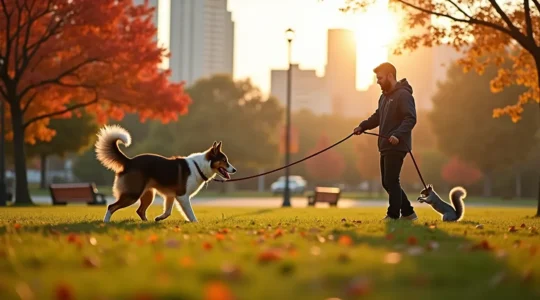
How to Proof Your Dog’s Recall Against Squirrels and Geese in Canadian City Parks
A reliable recall in a busy Canadian park isn’t about having the best treats; it’s about systematically overriding your dog’s hardwired prey drive. Prey drive operates in stages; training must intercept the “chase” instinct before it fully engages. Your tools…
Read more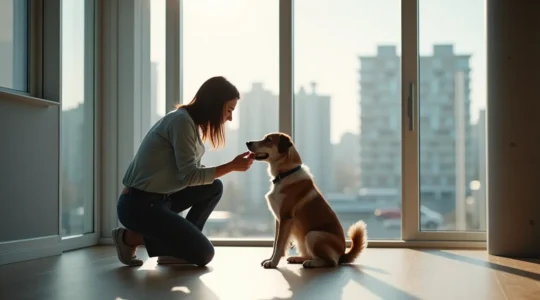
How to Resolve Nuisance Barking in Your Condo and Avoid Eviction
The constant fear of a noise complaint isn’t solved by silencing your dog, but by understanding their overwhelming sensory world. Your dog hears high-frequency sounds from elevators and chargers that you can’t, causing what seems like “unexplained” reactivity. Shouting back…
Read more
Permissive vs. Authoritative: Which Parenting Style Creates Anxious Dogs?
The biggest source of a dog’s anxiety isn’t a lack of love or too many rules—it’s unpredictability. Inconsistent commands and boundaries from owners dramatically increase a dog’s cognitive load and chronic stress. Clear, predictable boundaries, even if they seem strict,…
Read more
Beyond the “Alpha”: The Science of Building a Cooperative Partnership With Your Dog
Contrary to popular belief, striving to be the “alpha” creates more behavioural problems than it solves; true leadership comes from building a cooperative partnership based on trust and clear communication. The “alpha wolf” theory was based on flawed observations of…
Read more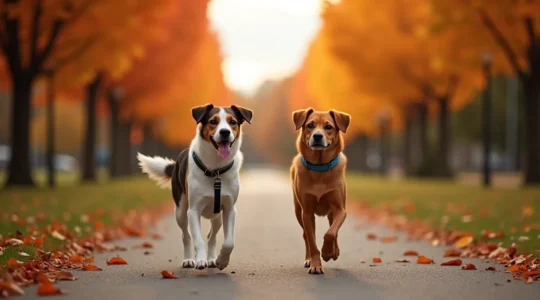
How to Introduce a Second Dog Without Disrupting Your First Dog’s World
Bringing a second dog home shouldn’t feel like a gamble for your first dog’s happiness; it’s a manageable process that requires proactive leadership. Successful integration relies on managing the environment and dog interactions, not on hoping they’ll “work it out.”…
Read more
Why Does Your Anxious Dog Need a Covered “Den” Even Indoors?
For an anxious dog, a den isn’t just a cozy bed—it’s a critical tool for managing a nervous system on high alert. It actively blocks overwhelming external triggers like storms, household traffic, and unexpected noises. It fulfills a deep-seated instinct…
Read more
How Does Ontario’s BSL Impact Your Choice of Mixed-Breed Dogs?
Contrary to the law’s intent, Ontario’s Breed-Specific Legislation (BSL) doesn’t just target “pit bulls”; it puts any dog with a blocky head or muscular build at risk due to its reliance on scientifically unsound visual identification. Visual identification of “pit…
Read more