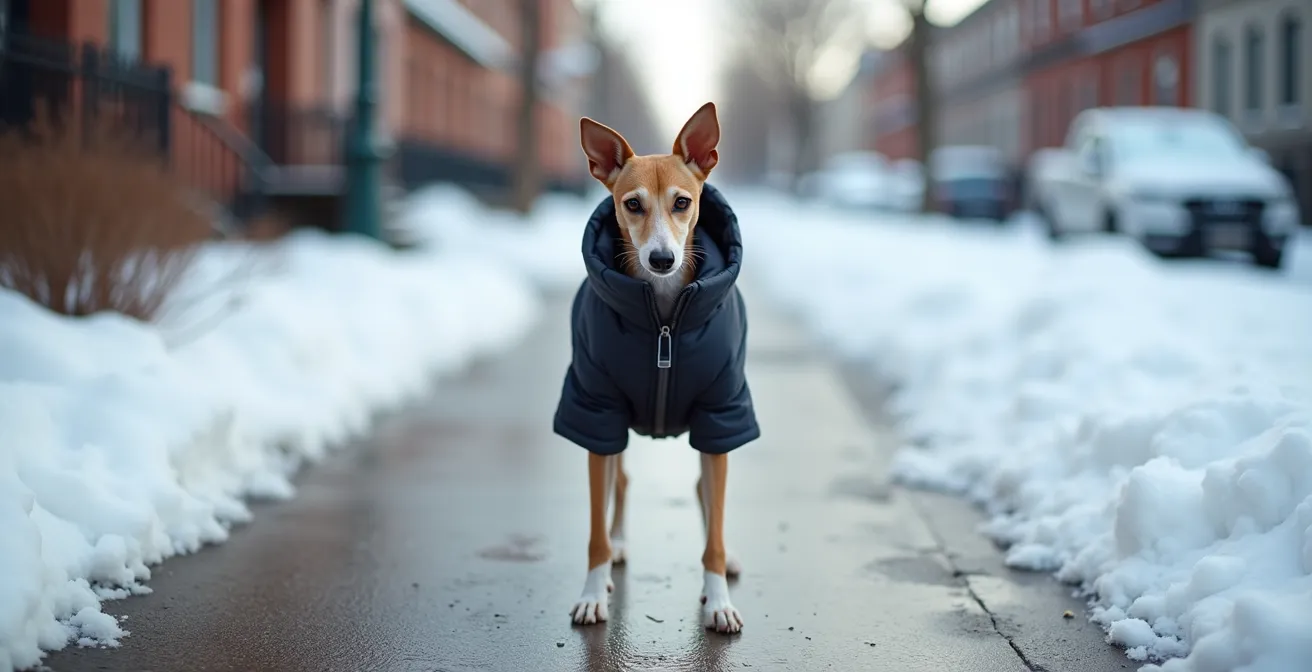
Contrary to popular belief, the number on the thermometer isn’t the most critical factor for your short-haired dog’s winter safety. As a veterinarian in Canada, I’ve seen the real dangers lie closer to the ground, in the humidity of your home, and even inside a seemingly cozy coat. This guide moves beyond simple temperature charts to give you a complete system for protecting your dog, focusing on ground-level exposure, proper layering for wet snow versus dry cold, and overlooked risks like winter weight gain and dehydration.
That first blast of Canadian winter air hits you. You’re bundled up in a parka and toque, but what about your short-haired dog, like a Boxer or Doberman, already shivering by the door? As a newcomer to Canada or a first-time owner of a sleek-coated breed, it’s natural to worry. Your first instinct is likely to check the weather app and look for a simple temperature rule, or to rush out and buy the thickest coat you can find. These are common starting points, but they barely scratch the surface of true winter preparedness.
The reality of a Canadian winter is far more complex than a single digit. There’s the damp, heavy snow of Halifax, the biting dry wind of Calgary, and the salted sidewalks of Toronto. A generic approach to winter safety often fails because it misses crucial nuances. It overlooks the fact that a small dog experiences a much colder world near the frozen ground, that the wrong type of coat can cause a double-coated dog to overheat, or that the dry air from your furnace poses a silent threat to their hydration.
But what if the key to winter safety wasn’t just about fighting the cold, but about understanding the entire winter ecosystem your dog lives in? This is the perspective we will adopt. As a winter safety veterinarian, my goal is to shift your focus from the thermometer to your dog’s specific physiology and environment. We will look beyond the air temperature to the ground temperature, beyond a simple coat to a functional layering system, and beyond hypothermia to the secondary risks that emerge between November and March.
This guide is structured to walk you through this comprehensive approach. We will explore why the temperature feels different for your dog, how to dress them for specific Canadian weather conditions, and how to manage their health holistically through the long winter months, ensuring they don’t just survive, but thrive.
Summary: How to Navigate Canadian Winters with Your Short-Haired Dog
- Why Does -10°C Feel Like -20°C to a Small Dog Near the Ground?
- How to Layer Fleece and Shells for Days with Wet Snow?
- Booties or Heat Pads: What Actually Keeps Toes Warm in Deep Snow?
- The Overheating Paradox: Why Double-Coated Dogs Shouldn’t Wear Parkas
- When to Walk in Winter: Utilizing the Mid-Day Sun for Seniors
- Why Do Canadian Pets Gain 10% More Weight Between November and March?
- Why Does Low Humidity Increase Dehydration Risk in Renal Patients?
- How to Find a Winter Coat That Actually Fits a Dachshund or Greyhound?
Why Does -10°C Feel Like -20°C to a Small Dog Near the Ground?
The first mistake many dog owners make is judging the cold from their own height. When the weather forecast says -10°C, that’s the temperature five or six feet in the air. For a small, short-haired dog whose belly is just inches from the frozen pavement or snowpack, the reality is drastically colder. This phenomenon, known as the ground-level temperature gradient, means your dog is living in a much harsher microclimate. Heat radiates away from the body towards the colder ground, and with minimal fur as insulation, the risk of hypothermia and frostbite escalates quickly.
Furthermore, small dogs have a higher surface-area-to-volume ratio, meaning they lose body heat much faster than larger dogs or humans. A brisk walk in what feels like mild winter weather to you can be a serious endurance test for them. It’s crucial to look for early signs of cold stress: shivering, anxiety, whining, or lifting paws off the ground. These are not just signs of discomfort; they are physiological signals that their body is struggling to maintain its core temperature. Ignoring them can lead to more severe issues.
The type of ground surface also plays a massive role. A walk on fresh, fluffy snow is insulating, while a walk on frozen concrete or ice in downtown Montreal or Toronto will sap heat from their paw pads almost instantly through conduction. This is why a simple temperature reading is insufficient. You must assess the “real feel” at your dog’s level, considering their size, the ground cover, and wind chill.
Your checklist for assessing ground-level cold
- Monitor for signs of distress like shivering or lifting paws as soon as the temperature drops below freezing (0°C).
- Limit walks to a maximum of 15 minutes when the thermometer hits -10°C or below, understanding it’s much colder for your dog.
- Immediately check paw pads for redness or ice after walking on salted sidewalks, common in cities like Toronto and Montreal.
- Factor in dog height: smaller dogs experience significantly colder temperatures being closer to the frozen ground.
- Watch for ice balls forming between their toes, especially during walks near the shores of Lake Ontario or in slushy conditions.
Understanding this microclimate is the first step. The next is to create a protective barrier against it.
How to Layer Fleece and Shells for Days with Wet Snow?
Once you recognize the intense cold your dog faces, the impulse is to buy a thick, insulated parka. However, for the variable Canadian climate, a single heavy layer is often the wrong choice. The secret to true thermal integrity is layering, just as it is for humans who ski or hike. This approach allows you to adapt to changing conditions, from a dry, frigid day in Calgary to a wet, slushy one in Vancouver. A proper layering system consists of two key components: a soft, insulating base layer and a protective outer shell.
The base layer, typically made of polar fleece, has one primary job: to trap air warmed by your dog’s body, creating an insulating barrier. The outer layer, or shell, should be waterproof and windproof. Its job is to protect the insulating fleece from getting wet. A wet base layer loses all its insulating properties and will actually make your dog colder by pulling heat away from their body. This combination is especially critical in regions with wet snow and freezing rain, such as Atlantic Canada.
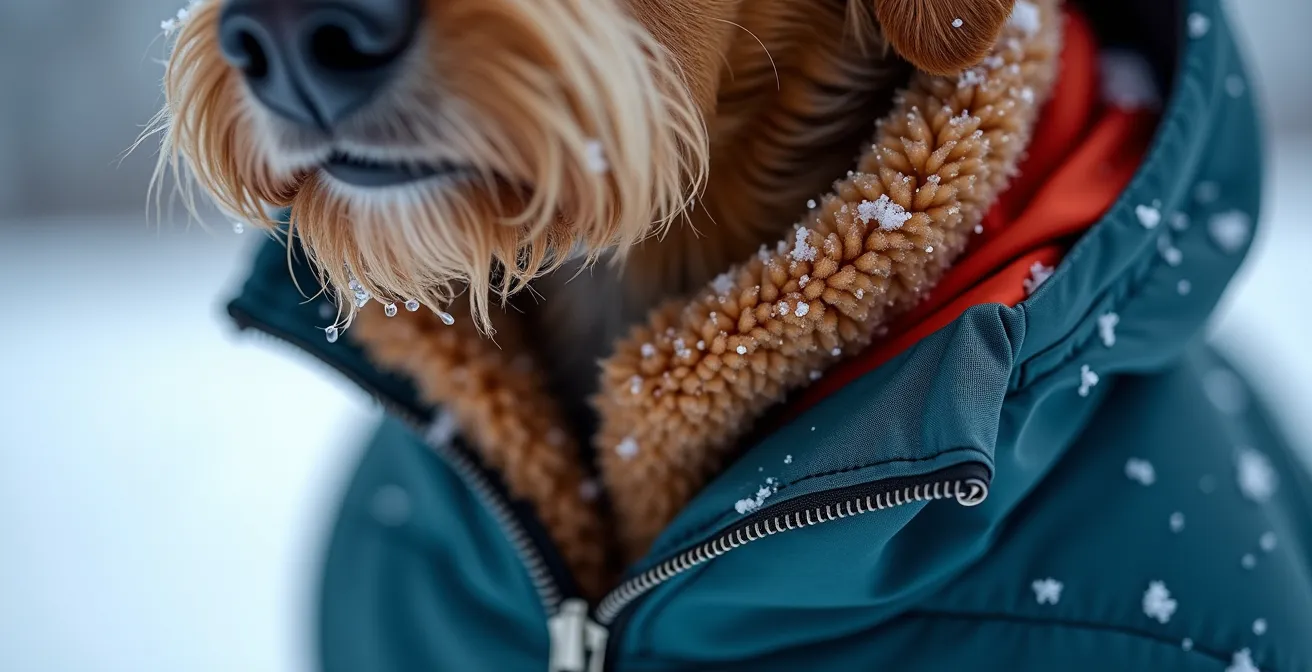
As the image above demonstrates, the effectiveness of layering lies in the distinct roles of each material. The fleece provides warmth, while the shell provides protection from the elements. For a day with heavy, wet snow in Halifax, you’d use both layers. For a crisp, cold but dry day on the Prairies, the fleece layer alone might suffice for a short walk. This adaptability is what keeps your dog safe and comfortable across Canada’s diverse winter landscapes. Some brands, like Canada Pooch, even design integrated systems with waterproof shells over fleece, specifically for the challenging mix of heavy snow and freezing rain.
This table breaks down the best material choices for different Canadian climate zones, as the needs in coastal British Columbia are vastly different from those in Southern Alberta during a Chinook.
| Climate Zone | Best Material | Key Benefit | Temperature Range |
|---|---|---|---|
| BC Coastal (Vancouver) | Waterproof Shell + Light Fleece | Moisture management in damp 0°C | 0°C to -5°C |
| Prairie Cold (Calgary) | Down or Heavy Synthetic | Maximum insulation for dry cold | -20°C to -30°C |
| Atlantic Canada (Halifax) | Synthetic + Waterproof | Quick-drying in wet snow | -5°C to -15°C |
| Southern Alberta (Chinook zone) | Removable Layers | Adaptable to 20°C swings | Variable |
This approach protects your dog’s core, but another vulnerable area requires specific attention: their paws.
Booties or Heat Pads: What Actually Keeps Toes Warm in Deep Snow?
The direct point of contact between your dog and the frozen ground—the paw-ground interface—is a critical area for heat loss and injury. Paws are susceptible to frostbite and painful cracks from the cold, but the biggest urban threat is man-made: de-icing products. As a veterinarian, I see countless cases of irritated, burned paws caused by rock salt and chemical de-icers common on Canadian city sidewalks.
The most common debate among owners is “booties versus balm.” The answer depends on the environment. Dog booties offer the most complete protection. They create a physical barrier against sharp ice, frozen ground, and, most importantly, chemical salts. However, their effectiveness is entirely dependent on fit. A poorly fitted boot will fall off, cause chafing, or be so uncomfortable that your dog refuses to walk. The Ontario SPCA even recommends watching a video guide on proper fitting, as a good fit is essential for protection on salted Toronto and Ottawa sidewalks.
On the other hand, paw balms or waxes (often petroleum jelly-based) are a viable alternative for dogs who won’t tolerate booties or for walks in less harsh conditions. The balm creates a semi-permeable barrier on the paw pads that can help prevent ice balls from forming between the toes and offer some protection from salt. However, it is not a complete shield. As the Town of Banff’s official guidelines highlight, vigilance is key.
Rock salt, used to melt ice on sidewalks, may irritate footpads. Be sure to rinse and dry your dog’s feet after a walk. Consider purchasing dog booties for your pet’s feet.
– Town of Banff Animal Services, Official Winter Pet Care Guidelines
Whether you use booties or balm, this advice is non-negotiable: always wash and dry your dog’s paws after every single winter walk. This removes any residual salt or chemicals before they can be licked off, preventing both skin irritation and internal toxicity. This simple two-minute habit is one of the most effective preventative measures you can take.
While protecting short-haired dogs is vital, it’s also possible to overdo it, especially with certain breeds.
The Overheating Paradox: Why Double-Coated Dogs Shouldn’t Wear Parkas
In our understandable desire to keep our pets warm, it’s easy to assume all dogs need a winter coat. This leads to what I call the overheating paradox, a common sight in Canadian dog parks: a Siberian Husky or a Bernese Mountain Dog, bred for harsh climates, panting heavily inside a thick, insulated parka. These breeds have a sophisticated natural layering system—a dense, soft undercoat for insulation and longer, coarser guard hairs to repel snow and moisture. Putting a heavy coat on them is not only unnecessary but can be dangerous.
A coat compresses their natural undercoat, reducing its ability to trap air and insulate effectively. More importantly, it can trap heat and moisture, leading to overheating, even in freezing temperatures. Signs of overheating include excessive panting, frantic snow-eating in an attempt to cool down, and visible distress. According to veterinary experts at the University of Calgary, while winter jackets benefit thin-skinned, short-haired dogs, large ones with heavy coats might not require them at all. For these dogs, clothing should be reserved for specific situations, like an uninsulated, waterproof shell during wet snowfall in Quebec to keep their natural coat dry, not to add warmth.
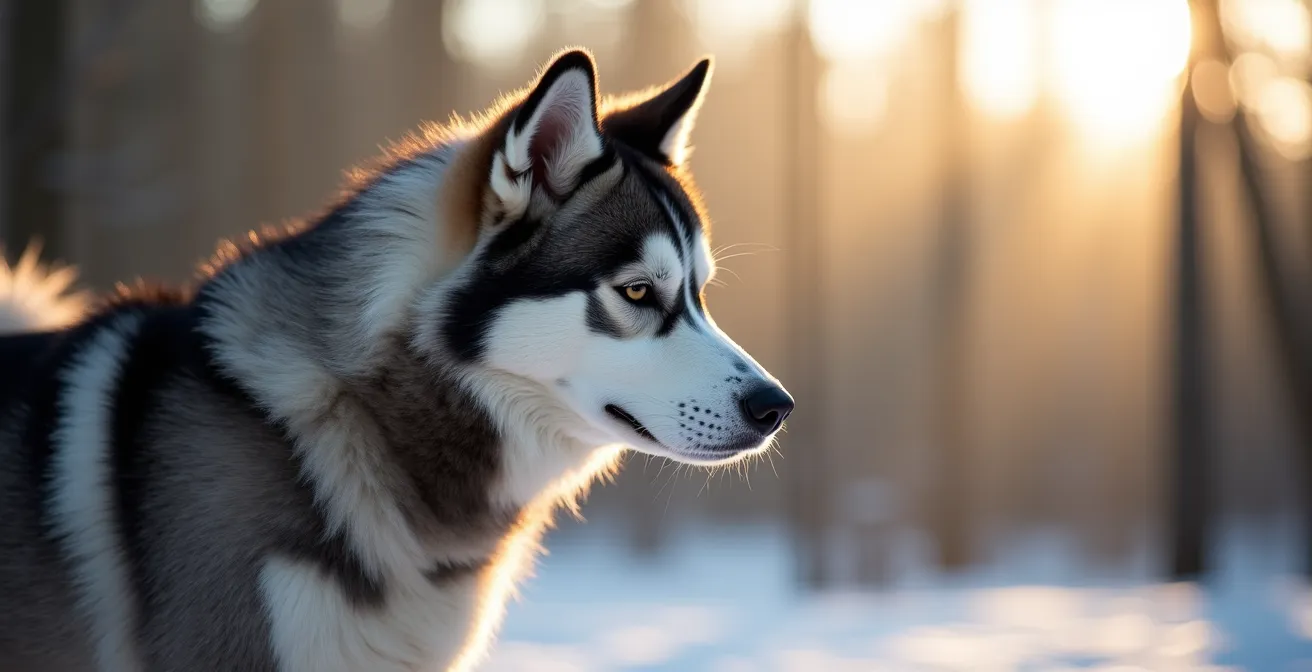
The Siberian Husky in this photo is a perfect example of natural thermoregulation. Their thick double coat is visibly fluffed, trapping air and providing all the insulation they need. They are comfortable and alert, with their body’s systems working exactly as they evolved to. Forcing this dog into a parka would be counterproductive and uncomfortable. It is crucial to assess your dog’s breed and coat type before assuming they need clothing. For double-coated breeds, less is almost always more.
- Check for excessive panting despite cold temperatures.
- Look for frantic snow-eating behavior as a cooling mechanism.
- Feel under the coat for dampness from trapped moisture.
- Use uninsulated waterproof shells only for wet Quebec snowfalls.
- Remove any clothing immediately upon returning indoors.
- Allow their natural undercoat to loft, providing insulation without compression.
Just as important as what your dog wears is *when* they are exposed to the cold, especially for more vulnerable pets.
When to Walk in Winter: Utilizing the Mid-Day Sun for Seniors
For senior dogs, puppies, or those with chronic health conditions, the timing of winter walks is as important as the gear they wear. Their ability to regulate body temperature is less efficient, and cold can exacerbate existing issues like arthritis. Early mornings and late evenings, when temperatures plummet and ice is most treacherous, should be avoided. The best strategy is to harness the limited power of the winter sun by scheduling walks during the warmest part of the day.
This “solar noon” window, typically between 12:00 PM and 2:00 PM in most Canadian cities, offers a slight temperature advantage and better visibility. Dr. Shane Bateman from the Ontario Veterinary College specifically recommends this approach. He also suggests that for senior dogs, ” shorter or more frequent walks [to] help to keep those joints limber and the inflammation under control.” A 10-minute walk at 1 PM is far more beneficial and safer than a single 30-minute walk at 8 AM when black ice is a major hazard.
On days when the cold is simply too extreme (generally below -15°C or -20°C), it’s crucial to have indoor alternatives. Don’t skip exercise entirely. Instead, engage in indoor activities like scent work games, puzzle feeders, or short training sessions to provide mental and physical stimulation. Forcing a senior or vulnerable dog into dangerously cold weather is never worth the risk. Adapting their routine shows a deep understanding of their needs, prioritizing their well-being over a rigid walking schedule. And for any walk that happens near dusk, which can be as early as 4 PM in a Canadian winter, reflective gear is absolutely essential for their safety.
The cold itself is only one part of the winter wellness puzzle; a host of secondary risks emerge when a dog’s activity levels change.
Why Do Canadian Pets Gain 10% More Weight Between November and March?
One of the most common but overlooked consequences of a long Canadian winter is weight gain. As walks become shorter and less frequent due to extreme cold, activity levels plummet. At the same time, a dog’s biological drive can signal them to eat more. This is a holdover from their ancestors, for whom extra calories were needed to generate body heat and an extra layer of fat provided insulation. As Cabbagetown Pet Clinic veterinarians report, dogs likely consume more food during winter months because extra calories are required for thermoregulation.
This creates a perfect storm for the “winter wellness paradox”: decreased caloric output combined with increased caloric intake. While a tiny bit of extra fat can act as insulation, the average winter weight gain of 10% or more puts significant stress on a dog’s body. This is especially dangerous for short-haired breeds who may already have a lean build, like Greyhounds or Whippets. The extra weight puts immense pressure on their joints, increasing the risk of injury on slippery, icy surfaces.
Managing this requires a two-pronged approach. First, monitor food portions carefully. Unless your dog is a true working dog spending hours outside, they likely do not need extra food. Consult your veterinarian to confirm the right portion size for their reduced winter activity level. Second, get creative with indoor exercise. Brands like Canada Pooch have developed innovative solutions like “condo agility” exercises designed for smaller living spaces in cities like Vancouver, or interactive puzzle feeders that make your dog work for their meals. These activities burn calories and, just as importantly, prevent the boredom and frustration that can come with being cooped up indoors.
The controlled indoor environment that helps manage activity also presents its own unique health challenge.
Why Does Low Humidity Increase Dehydration Risk in Renal Patients?
While we focus on the freezing temperatures outside, the dry environment inside our homes creates another significant winter health risk: dehydration. Forced-air furnaces, common across Canada, pump warm but extremely dry air throughout the house, causing ambient humidity levels to plummet. This dry air increases a dog’s rate of “insensible water loss”—moisture that evaporates from their respiratory tract just through breathing. For most healthy dogs, this just means they might drink a bit more water. But for dogs with underlying health issues, particularly kidney (renal) disease, it’s a serious threat.
Dogs with compromised kidney function have a harder time conserving water. The increased respiratory water loss from dry indoor air can quickly tip them into a state of dehydration, putting immense strain on their already struggling kidneys. As a veterinarian, I always stress the importance of hydration, especially for vulnerable pets. Signs of dehydration can be subtle, including a dry nose, sticky gums, and lethargy.
Adequate water is just as important as food to an outdoor dog’s health.
– VCA Canada Animal Hospitals, Preparing Your Pets for Winter Guidelines
To combat this, especially in the dry Prairie provinces, a specific hydration protocol is essential. Using a humidifier near your dog’s favorite sleeping spot can make a huge difference. You can also increase their water intake by adding warm water or low-sodium bone broth to their dry kibble. It’s also wise to use plastic or ceramic water bowls instead of metal ones outdoors, as a dog’s tongue can stick to frozen metal, causing a painful injury. Increasing the number of water stations throughout the house serves as a constant reminder for them to drink, safeguarding their health against the unseen dangers of winter.
With a full understanding of the risks, we can now address the most practical challenge: finding the right gear that actually works.
Key Takeaways
- The temperature your dog experiences near the frozen ground is far colder and more dangerous than the air temperature you feel.
- A layering system (insulating fleece + waterproof shell) offers better, more adaptable protection for Canada’s varied climates than a single heavy coat.
- Winter dangers go beyond the cold: watch for weight gain from inactivity and dehydration from dry indoor heating.
How to Find a Winter Coat That Actually Fits a Dachshund or Greyhound?
For short-haired dogs with unique body shapes, like the long-backed Dachshund or the deep-chested Greyhound, finding a winter coat is more than a matter of fashion—it’s a significant functional challenge. A standard-sized coat will leave a Dachshund’s rear end exposed to the cold, while a coat that’s long enough for a Greyhound will be absurdly loose around their narrow waist. An ill-fitting coat is not just uncomfortable; it’s ineffective, creating gaps where cold air can penetrate and failing to protect their core body temperature.
This is where specialized and custom-fit gear becomes essential. For these breeds, you must prioritize three measurements: neck, chest girth (the widest part), and back length. A proper fit means the coat is snug but not restrictive, allowing for a full range of motion. It should provide ample coverage over the chest and rump, the major muscle groups where significant heat loss occurs. Luckily, several Canadian companies have recognized this need and specialize in gear for hard-to-fit breeds. Chilly Dogs, an Ottawa-based company, is renowned for its custom-fit winter coats that cater specifically to the unique silhouettes of Greyhounds and Whippets, ensuring complete protection.
For new Canadians, navigating the local market for these specialty items can be daunting. The table below highlights some reputable Canadian brands and retailers that offer solutions for long or barrel-chested dogs, making your search much easier.
| Brand/Store | Special Features | Best For | Available At |
|---|---|---|---|
| Chilly Dogs (Ottawa) | Custom measurements, deep chest coverage | Greyhounds, Whippets | Online, Ottawa store |
| Canada Pooch | Barrel-chest sizes (14+, 20+) | Dachshunds, Frenchies | Pet Valu, online |
| True North Parka | Extended back length options | Long-bodied breeds | Mondou, Pet Valu |
By moving beyond generic advice and embracing a tailored approach that considers your dog’s breed, your specific Canadian climate, and their entire winter environment, you provide the highest standard of care. This holistic view is the key to a safe, healthy, and happy winter for you and your companion.