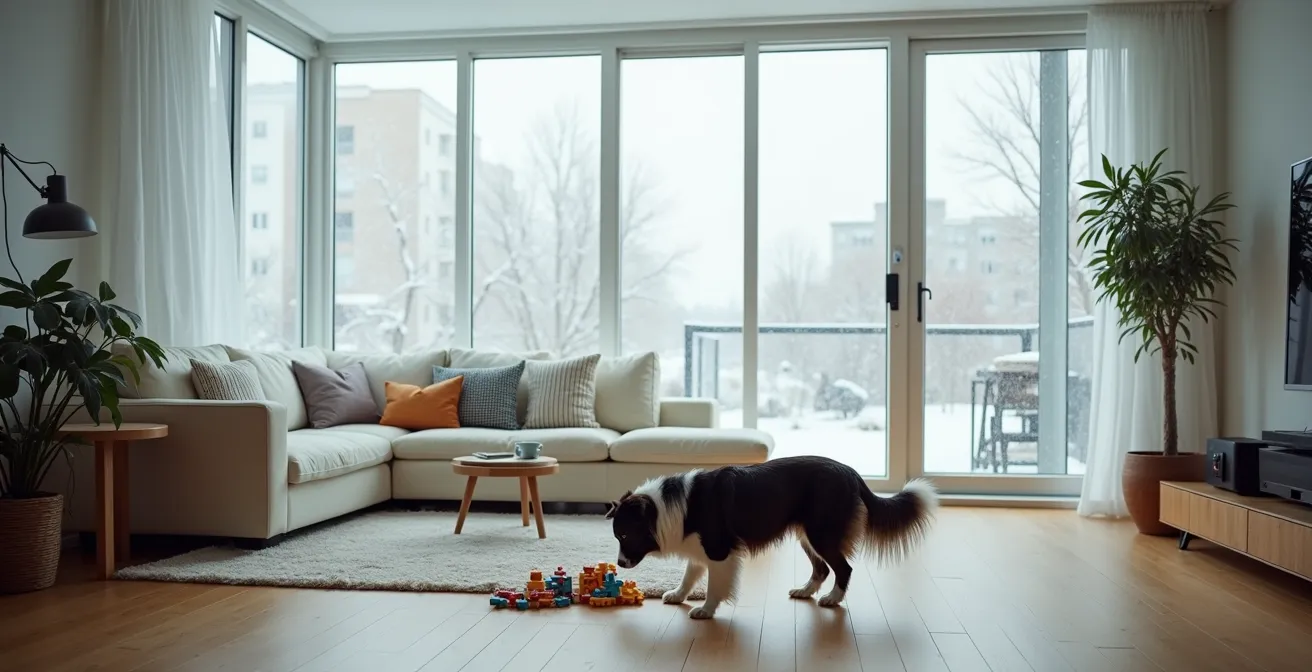
Contrary to popular belief, you don’t need a backyard to tire out a Border Collie; you need a strategic game plan for their brain.
- Mental stimulation, or “cognitive load,” is more exhausting than repetitive physical exercise.
- Indoor safety is paramount; low-impact games prevent joint injuries on slippery floors.
- A structured daily schedule prevents boredom and manages your dog’s instinctual drives.
Recommendation: Stop trying to just burn energy. Start managing it with a predictable routine of brain games, controlled play, and calming activities.
We’ve all been there. The snow is piling up past the windows, a classic Canadian blizzard has shut down the city, and your Border Collie is giving you *the look*. It’s a mix of frantic energy, profound intelligence, and a desperate plea for a job to do. The four walls of your condo suddenly feel like they’re closing in. The common advice is to play fetch down the hallway or start a game of tug-of-war, but these activities often just ramp up the energy, leading to a state of hyper-arousal and the dreaded evening “zoomies.”
Most owners focus on physical exhaustion, but this is a losing battle with a breed designed to run for miles. The true secret to a calm and fulfilled Border Collie during prolonged confinement isn’t about matching their physical output; it’s about challenging their incredible intellect. What if the key wasn’t more running, but more thinking? This guide shifts the focus from mindless energy burning to strategic cognitive management. It’s about understanding the “why” behind their behaviour and using targeted enrichment to satisfy their core drives safely within a small space.
We will explore the science of mental fatigue, provide step-by-step instructions for powerful brain games, and address critical safety concerns for indoor play. Ultimately, you will learn how to build a structured “blizzard-day” schedule that provides the purpose and engagement your brilliant companion craves, turning a stressful situation into a rewarding bonding experience.
This article will guide you through a complete strategy for indoor enrichment. Below is a summary of the key areas we will cover to help you and your Border Collie not just survive, but thrive, during the long Canadian winter.
Summary: A Strategic Plan for Indoor Border Collie Enrichment
- Why Does 15 Minutes of Brain Games Equal 1 Hour of Walking?
- How to Teach “Find It” Using Cardboard Boxes and Kibble?
- Flirt Pole or Hallway Fetch: Which Builds More Drive in Small Spaces?
- The Laminate Floor Danger: Why Indoor Fetch Can Cause ACL Tears
- When to Schedule Play: avoiding the “Zoomies” Before Bedtime
- Why Do Canadian Pets Gain 10% More Weight Between November and March?
- Why Does Your Dog React to Elevator Sounds You Can’t Even Hear?
- Kong vs. Nina Ottosson Puzzles: Which Provides Longer Entertainment?
Why Does 15 Minutes of Brain Games Equal 1 Hour of Walking?
The core of managing a high-energy dog indoors lies in understanding a simple principle: mental fatigue is more effective than physical fatigue alone. For a Border Collie, a walk around the block, even a long one, can be physically tiring but mentally unfulfilling. Their brains are wired for complex problem-solving, not just repetitive motion. This is why research shows that intensive mental exercise like a 15-minute puzzle session can tire a dog out more effectively than a much longer walk.
This phenomenon is all about cognitive load. When your dog has to think, concentrate, and make decisions—like how to get a treat out of a puzzle or where a scent is hidden—they are engaging their prefrontal cortex. This type of focused brain activity consumes a significant amount of glucose (brain fuel), leading to a state of calm satisfaction. It’s the difference between a person doing manual labour versus taking a difficult exam; both are exhausting, but in fundamentally different ways. For a Border Collie, the “exam” is what truly satisfies them.
Running endlessly down a hallway during a game of fetch might tire their muscles, but it can also increase adrenaline and cortisol, leading to a state of hyper-arousal. They become physically spent but mentally wired. Brain games, on the other hand, lower arousal levels. Activities like learning a new trick, scent work, or engaging with an interactive toy require impulse control and focus, which are the building blocks of a calm and well-behaved companion. Shifting your goal from “burning energy” to “providing a cognitive challenge” is the single most important mindset change for surviving a blizzard in a condo.
How to Teach “Find It” Using Cardboard Boxes and Kibble?
One of the most powerful and space-efficient brain games is scent work, often cued with the phrase “Find It.” Border Collies, with their problem-solving heritage, excel at this activity. It requires zero special equipment, satisfies their innate desire to work, and can be scaled in difficulty to keep them challenged. The simplest way to start is with a few cardboard boxes and their regular kibble.
Begin by letting your dog watch you place a piece of high-value kibble in one of three or four boxes placed on the floor. Give the cue “Find It!” and encourage them to investigate. When they locate the correct box, praise them enthusiastically. Repeat this a few times until they understand the game. The next step is to increase the cognitive load. Have them wait in another room while you hide the kibble, so they must rely solely on their nose, not their eyes. Gradually increase the number of boxes and start placing them in different rooms or at different heights.
This introductory game taps directly into their natural abilities. As they become more proficient, you can escalate the challenge by using more complex scent puzzles, or even hiding yourself or other family members for them to find. This not only sharpens their senses but also reinforces their problem-solving skills in a controlled, safe environment.

As you can see, the game is about focus and investigation, not frantic energy. The dog is calm, methodical, and engaged in a task. This is the kind of low-impact, high-reward activity that builds confidence and provides deep mental satisfaction, making it a perfect tool for a blizzard-bound day. It turns your entire condo into a giant puzzle for your dog to solve.
Flirt Pole or Hallway Fetch: Which Builds More Drive in Small Spaces?
While brain games are critical, physical expression is still necessary. The challenge in a condo is providing that outlet safely and effectively. This requires strategic “drive management”—choosing activities that satisfy your Border Collie’s core instincts (like prey or herding drive) in a controlled manner. Two common indoor options are the flirt pole and hallway fetch, but they serve very different purposes and come with different risks.
Flirt pole satisfies prey drive in a controlled space, excellent for a Border Collie’s sharp turns and focus. Hallway fetch taps into retrieving/herding drive but with higher risk.
– Pet Daily Editorial Team, Mental Games Your Border Collie Will Love
A flirt pole (essentially a lure on a wand) is an exceptional tool for small spaces. It allows you to engage your dog’s prey drive with sharp turns, quick starts, and sudden stops, all within a small, controlled area. This builds incredible focus and impulse control, as the game requires rules like “drop it” and waiting for a release cue. It’s a high-intensity workout for the mind and body that doesn’t require a long running lane.
Hallway fetch, on the other hand, taps into their retrieving and herding instincts but is fraught with peril in a condo setting. The repetitive sprinting and hard stops on laminate or hardwood floors can be a recipe for injury, a topic we will cover in detail next. The following table breaks down the key differences:
| Activity | Space Required | Drive Type Targeted | Safety Considerations |
|---|---|---|---|
| Flirt Pole | 6×6 feet minimum | Prey drive, focus, sharp turns | Low injury risk with controlled movements |
| Hallway Fetch | 20+ feet corridor | Retrieving/herding drive | Higher risk on smooth floors, noise concerns |
| Tug Games with Rules | 3×3 feet | Interactive drive, impulse control | Minimal risk with ‘drop it’ commands |
For a condo dweller, the flirt pole is almost always the superior choice for managing physical drive. It offers a higher degree of control, lower risk of injury, and a more intense mental workout through the focus it demands. It satisfies the chase instinct without turning your hallway into a slip-and-slide.
The Laminate Floor Danger: Why Indoor Fetch Can Cause ACL Tears
The single greatest physical threat to a high-energy dog in a modern condo is the floor itself. Laminate, hardwood, and tile offer zero traction for a dog making a quick turn or a sudden stop during a game of fetch. This is how cruciate ligament (ACL) tears happen. When a dog’s paws slide out from under them during a moment of high-speed excitement, immense torque is placed on the knee joint, often resulting in a debilitating and expensive injury. For a breed as agile and intense as a Border Collie, playing fetch on a slippery surface is a gamble every single time.
This is why the principle of low-impact engagement is non-negotiable for indoor play. Your role as an enrichment coach is to create a safe environment first and foremost. This doesn’t mean no physical activity; it means modifying the environment and the games. Instead of high-impact fetch, consider setting up small, low-to-the-ground obstacle courses with pillows, boxes, and chairs. These activities encourage controlled movements, build body awareness (proprioception), and provide both mental and physical stimulation without the risk.
Even short training sessions of 10-15 minutes that focus on controlled movements like spins, weaving through your legs, or backing up are safer and more beneficial than a risky game of fetch. The goal is to prevent injury by designing activities that prioritize control over chaos. Before engaging in any physical play, an audit of your play space is essential.
Your Condo Slip-Proofing Action Plan
- Assess play zones: Identify all hallways and open areas where play occurs.
- Inventory surfaces: Note which floors are slippery (laminate, tile, hardwood) versus safe (carpet, large area rugs).
- Implement traction solutions: Place non-slip runner rugs or yoga mats in high-traffic play areas to create safe zones.
- Consider paw grip: Test paw wax or non-slip dog socks for added traction, especially for senior dogs or those with mobility issues.
- Plan for safe play: Commit to using these safe zones for any game involving running or turning and trim paw fur regularly to maximize pad contact.
When to Schedule Play: avoiding the “Zoomies” Before Bedtime
Managing a Border Collie through a blizzard isn’t just about what you do; it’s about when you do it. A structured enrichment schedule is your most powerful tool for preventing boredom-based destructive behaviours and avoiding the dreaded pre-bedtime “zoomies.” A Border Collie without a job will invent one, and their inventions rarely align with your security deposit. A predictable routine provides them with the sense of purpose they crave and helps regulate their energy and arousal levels throughout the day.
The key is to alternate between different types of engagement: mental work, physical activity, and calm time. High-arousal activities like flirt pole or tug should be scheduled for the morning or early afternoon, followed by a calming activity to help them decompress. A frozen Kong or LickiMat is perfect for this, as the act of licking is naturally soothing for dogs and lowers their heart rate. Saving these high-arousal games for late in the evening is a common mistake that leads to a “wired” dog at bedtime.
The evening should be reserved for winding down. Gentle massage, practicing a “settle” command on their bed, or a short, quiet scent game can help transition them from an active day to a restful night. This structure turns their day from a chaotic burst of energy into a series of fulfilling “jobs.”

Here is a sample blizzard-day schedule that balances mental, physical, and calming activities:
- Morning (7-8 AM): 15-minute training session practicing basic commands and teaching a new trick.
- Mid-Morning (10 AM): 20-minute puzzle toy or “Find It” scent work activity.
- Lunch (12 PM): Meal served in a frozen Kong for 30-45 minutes of calm engagement.
- Afternoon (2-3 PM): 15 minutes of low-impact agility using household items like pillows and chairs.
- Early Evening (5-6 PM): 20 minutes of interactive play (tug or controlled flirt pole session on a rug).
- Evening Wind-Down (7-8 PM): 10-minute “settle” command practice with gentle massage.
- Bedtime Routine (9 PM): Final potty break followed by quiet time in their crate or bed.
Why Do Canadian Pets Gain 10% More Weight Between November and March?
The challenge of a blizzard isn’t just managing day-to-day energy; it’s preventing the long-term health consequences of a sedentary winter. In Canada, the sharp decrease in outdoor activity from November to March leads to a predictable and dangerous trend: winter weight gain. Data consistently shows that a significant portion of our pets are overweight, a problem that is exacerbated by long periods of indoor confinement. In fact, it’s estimated that between 50 and 60 percent of pets in Canada are currently overweight or obese, according to the Canadian Veterinary Medical Association.
For a high-drive breed like a Border Collie, a few days of reduced exercise during a blizzard, combined with the same calorie intake, can quickly lead to weight gain. This extra weight puts stress on their joints, increasing the risk of conditions like arthritis and the very ACL tears we aim to prevent indoors. The problem is often one of perception; a study from a leading Canadian institution highlighted this gap. Specifically, research from the Ontario Veterinary College at the University of Guelph found that 94% of pet owners who identified their pet as overweight had low levels of readiness to take action.
The solution requires proactive management from the owner. During multi-day blizzards or extended periods of inactivity, it is crucial to adjust your dog’s food intake. A general guideline from veterinary experts is to reduce daily portions by 10-15% to match their reduced energy expenditure. This small adjustment can prevent the creeping weight gain that is so common during Canadian winters. It’s also vital to learn how to assess your dog’s body condition score at home, allowing you to make adjustments based on their physical state, not just the label on the food bag.
Why Does Your Dog React to Elevator Sounds You Can’t Even Hear?
Condo living presents a unique set of sensory challenges for a dog with hearing as sensitive as a Border Collie’s. They can hear frequencies far beyond our range, and during the eerie quiet of a blizzard, the internal sounds of the building become amplified. The ding of the elevator, the hum of the ventilation system, or the sound of a neighbour’s door closing can become significant stressors.
Dr. Ernie Ward, a noted veterinarian, explains this phenomenon perfectly, stating that “during a storm, the city’s ambient noise drops, making a condo building’s internal sounds more pronounced and stressful for a dog with sensitive hearing.” This is why your dog might suddenly start reacting to noises they previously ignored. Their world has become unnaturally quiet, making every small sound an event. This heightened sound sensitivity can lead to anxiety, alert barking, and an inability to settle.
Managing this requires a two-pronged approach: sound masking and desensitization. Using a white noise machine or playing a dog-calming playlist can help mask the sudden, sharp sounds of the building, creating a more consistent and less jarring auditory environment. Placing your dog’s bed or crate away from shared walls can also make a significant difference. The second part is active desensitization. You can create positive associations by offering a high-value treat every time the elevator dings or another trigger sound occurs. This process, known as counter-conditioning, can slowly change their emotional response from anxiety to positive anticipation. It’s another “job” that engages their brain and builds resilience.
Here are some practical strategies for sound masking in a condo:
- Use white noise machines set at a consistent, low volume.
- Play curated dog-calming music, especially during peak elevator hours (morning and evening commutes).
- Use heavy, sound-absorbing curtains on windows and near shared walls.
- Practice “Blizzard Desensitization” by playing recordings of trigger sounds at a very low volume and rewarding your dog for calm behaviour.
Key Takeaways
- Indoor success hinges on managing cognitive load, not just burning physical energy.
- Safety is paramount: use non-slip surfaces and low-impact games to prevent joint injuries.
- A predictable daily schedule of varied activities provides the structure and “work” a Border Collie needs to thrive.
Kong vs. Nina Ottosson Puzzles: Which Provides Longer Entertainment?
Your toolkit for indoor enrichment will inevitably include food-dispensing toys. They are a cornerstone of any good blizzard survival plan. However, not all toys are created equal. The two titans of the industry, the classic Kong and the intricate Nina Ottosson puzzles, serve very different functions and are best used at different times. Understanding their unique benefits allows you to deploy them strategically.
A frozen Kong is the king of long-duration, passive entertainment. When stuffed correctly and frozen solid, it can provide 30-60 minutes of calming activity. The act of licking and methodically working to get the food out is self-soothing and an excellent way to help your dog settle after a more active game or during a time when you need them occupied, like a work call. It requires moderate problem-solving but excels at promoting quiet time.
Nina Ottosson puzzles, on the other hand, are designed for high-intensity, active mental engagement. These puzzles, with their various sliding, lifting, and spinning components, require complex problem-solving and are best used as a short, supervised, interactive bonding session. A dog will typically solve one of these puzzles in 10-20 minutes. They are less about duration and more about the intensity of the cognitive challenge. Leaving a dog unsupervised with a complex plastic puzzle can lead to frustration and chewing, so they are a tool for “together time.”
This breakdown clarifies their different roles in your enrichment schedule:
| Feature | Frozen Kong | Nina Ottosson Puzzles |
|---|---|---|
| Duration | 30-60 minutes when frozen | 10-20 minutes per session |
| Engagement Type | Passive (owner can leave) | Active (requires supervision) |
| Mental Effort | Moderate – licking and problem-solving | High – complex puzzle solving |
| Best Use Time | During owner work calls | Interactive bonding time |
| Cost per Use | $0.50-1.00 per filling | One-time purchase |
To make your Kongs even more enticing and long-lasting, especially during a Canadian winter, try these local-friendly recipes:
- Layer 1 (Tantalizer): A small amount of peanut butter at the narrow end to get them started.
- Layer 2 (Main Fill): Mix their kibble with plain yogurt from local Canadian dairies.
- Layer 3 (Texture): Add a spoonful of canned pumpkin puree, readily available at Canadian grocery stores.
- Layer 4 (Challenge): Include small pieces of frozen banana or apple for a surprise.
- Layer 5 (Seal): Top with low-sodium bone broth and freeze for at least 3-4 hours.
By shifting your perspective from one of containment to one of strategic engagement, you transform a stressful blizzard lockdown into an opportunity. It’s a chance to deepen your bond, sharpen your dog’s mind, and build the calm, confident companion you know they can be. The key is not a bigger space, but a better plan. Begin today by implementing one new brain game or structuring just one part of their day, and build from there.