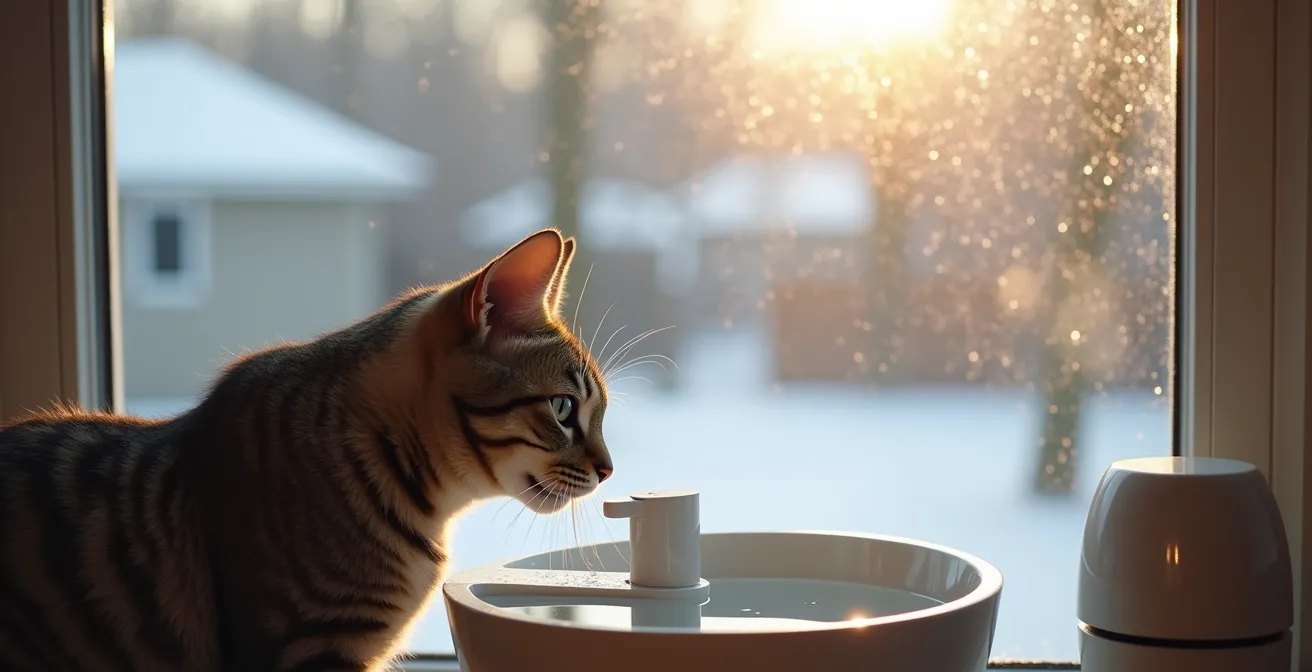
The dry air from your home’s heating is a silent threat to your senior cat’s kidney health, but simply adding more water isn’t enough.
- The key is to build a complete “Hydration Ecosystem” that manages environmental humidity and stimulates natural drinking behaviors.
- Proactive monitoring using tools like clumping litter can provide early warnings of renal decline weeks before other symptoms appear.
Recommendation: Immediately begin by increasing your home’s humidity and diversifying your cat’s water sources to counteract the dehydrating effects of Canadian winter air.
As a Canadian cat owner, you know the comforting hum of the electric heat kicking in on a frigid winter day. But for your senior cat, especially one with aging kidneys, this dry, warm air poses a silent but significant threat. You might already be adding water to their food or have tried a water fountain, following the standard advice. These are good first steps, but they often fail to address the root of the problem: a home environment that actively leaches moisture from your pet.
The reality is that chronic, low-grade dehydration is a major stressor on feline kidneys, and the desert-like conditions inside many Canadian homes during winter accelerate this risk. Studies show that 30-40% of cats over 10 years old develop chronic kidney disease (CKD), a condition where hydration is paramount. But what if the solution wasn’t just about getting more water *in* your cat, but about preventing it from leaving their body in the first place?
This guide moves beyond simple tips. We will construct a complete Hydration Ecosystem tailored to the unique challenges of a Canadian winter. It’s a holistic strategy that focuses on managing environmental humidity, using food as a hydration vehicle, stimulating natural thirst, and implementing proactive monitoring techniques. By turning your home from a dehydrating environment into a supportive oasis, you can provide powerful, proactive protection for your aging companion’s most vulnerable organs.
For a hands-on demonstration of a key support technique often recommended by veterinarians for cats with advanced kidney disease, the following video provides clear instructions on administering subcutaneous fluids at home.
This article provides a comprehensive plan to safeguard your cat’s renal health through proactive hydration. Explore the following sections to understand the risks and implement effective, vet-approved strategies in your home.
Summary: A Proactive Hydration Strategy for Senior Cats in Winter
- Why Does Low Humidity Increase Dehydration Risk in Renal Patients?
- How to Trick a Finicky Cat into Drinking 20% More Water Daily?
- Kibble vs. Canned: Is Dry Food Really Creating a State of Chronic Dehydration?
- The Subtle Thirst Signal 90% of Dog Owners Miss Until It’s Too Late
- How to Use Clumping Litter to Monitor Kidney Function Weekly?
- Travel Spray or Wall Plug-In: Which is Best for Vet Visit Anxiety?
- The Stream Water Risk: Why Letting Dogs Drink from Creeks Causes Giardia
- How to Trick a Finicky Cat into Drinking 20% More Water Daily?
Why Does Low Humidity Increase Dehydration Risk in Renal Patients?
The primary danger of dry winter air isn’t just a matter of comfort; it’s a physiological challenge. In a low-humidity environment, your cat loses a significant amount of water simply by breathing. This phenomenon, known as insensible water loss, happens without any visible signs like panting or sweating. For a senior cat whose kidneys are already working hard to conserve water, this constant, silent moisture loss can quickly lead to a state of chronic dehydration, placing immense strain on their renal system.
In Canada, this problem is particularly acute. While Health Canada recommends maintaining indoor humidity between 30-35% for human health, forced-air and electric heating systems can cause levels to plummet. According to HVAC experts in Ontario, indoor humidity can drop below 20% when outside temperatures fall below zero, creating an environment as dry as a desert. This is far below the 40-50% range considered optimal for homes with senior pets.
For a cat with CKD, this environmental dehydration is a critical issue. Their kidneys have a reduced ability to concentrate urine and conserve water. When the air itself is actively pulling moisture from their body through every breath, it forces the kidneys into overdrive. Managing your home’s humidity with a humidifier is therefore not a luxury, but a foundational part of your cat’s environmental hydration strategy.
How to Trick a Finicky Cat into Drinking 20% More Water Daily?
Increasing water intake for a finicky senior cat is more about psychology than just providing water. Cats are naturally cautious drinkers, preferring fresh, moving water away from their food and litter areas. A strategically placed water fountain is one of the most effective tools in your hydration arsenal. The movement and sound of a fountain tap into their instinctual preference for running water, which they perceive as safer and cleaner than a stagnant bowl.
The key is to make drinking an appealing and effortless activity. The illustration below showcases a setup with multiple, varied water stations, a core principle of the “Hydration Ecosystem.”
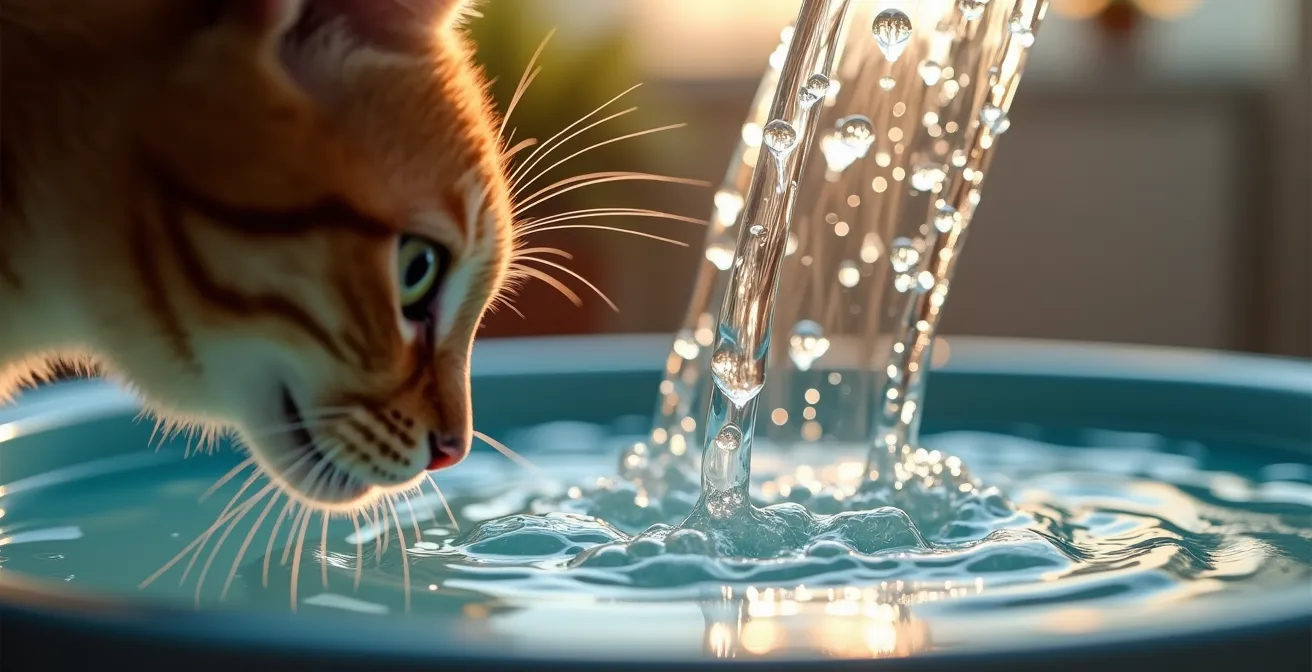
As you can see, variety and location are paramount. Don’t just place one fountain in the kitchen. Create a “hydration trail” throughout your home, especially during the low-activity winter months. Placing water stations in sunny spots, near heated beds, or along their most-traveled paths increases the chances of a spontaneous drink. For cats sensitive to noise, look for ultra-quiet pumps (under 40 dB) and non-plastic materials like ceramic or stainless steel, which don’t retain odors. Brands like Catit, available at retailers like PetSmart Canada, offer stainless steel options that are durable and easy to clean.
Kibble vs. Canned: Is Dry Food Really Creating a State of Chronic Dehydration?
The debate between wet and dry food is central to feline hydration, especially for cats with renal issues. Dry kibble typically contains only about 10% moisture, while a cat’s natural prey is around 70-75% water. A cat on a dry-food-only diet must drink a significant amount of additional water to compensate, a task that many, especially seniors with a diminished thirst drive, fail to achieve. This can lead to a state of chronic, low-grade dehydration that silently damages the kidneys over time.
In contrast, wet food, with a moisture content of around 78%, provides hydration with every bite. For a senior cat, switching to a prescription renal wet food is one of the single most effective ways to increase their total water intake and support kidney function. This dietary change essentially forces them to “eat” their water, bypassing their often-unreliable thirst drive.
However, cost and convenience are valid concerns for many Canadian owners. A good compromise can be rehydrating prescription renal kibble with warm water, turning it into a mash. This significantly increases its moisture content while being more budget-friendly than a wet-food-only diet. The following table breaks down the hydration benefits and estimated daily costs of popular Canadian kidney diet options.
| Diet Type | Water Content | Cost per Day (CAD) | Hydration Benefit |
|---|---|---|---|
| Hill’s k/d Kidney Care (wet) | 78% | $4.50-5.50 | Provides 150-200ml water daily |
| Royal Canin Renal (dry) | 10% | $2.00-3.00 | Requires 200ml additional water |
| Rehydrated kibble mix | 65% | $2.50-3.50 | Adds 100-150ml water daily |
Ultimately, food is the most powerful tool in your hydration ecosystem. By choosing a diet rich in moisture, you are providing a constant, reliable source of water that is essential for flushing toxins and supporting your senior cat’s aging kidneys.
The Subtle Thirst Signal 90% of Dog Owners Miss Until It’s Too Late
While the title mentions dogs, the principle is even more critical for cats: the most important signs of dehydration are subtle and often missed until the problem is advanced. Senior cats have a naturally diminished thirst drive, meaning they don’t feel thirsty until they are already significantly dehydrated. As their caretaker, you must become a proactive hydration detective, looking for early clues rather than waiting for obvious signs of illness like sunken eyes or severe lethargy.
This requires a shift from passive observation to active, weekly monitoring. An authoritative statement from VCA Canada Animal Hospitals underscores the urgency of this approach for senior felines:
Thirst is often decreased in senior cats, causing an increased risk of dehydration, especially when combined with concurrent renal insufficiency, a type of kidney disease common in older cats.
– VCA Canada Animal Hospitals, Senior Cat Care – Special Considerations
One of the most reliable at-home checks is the skin turgor test, as depicted below. By gently tenting the skin at the scruff of the neck, you can assess their hydration level. In a well-hydrated cat, the skin should snap back into place almost instantly.
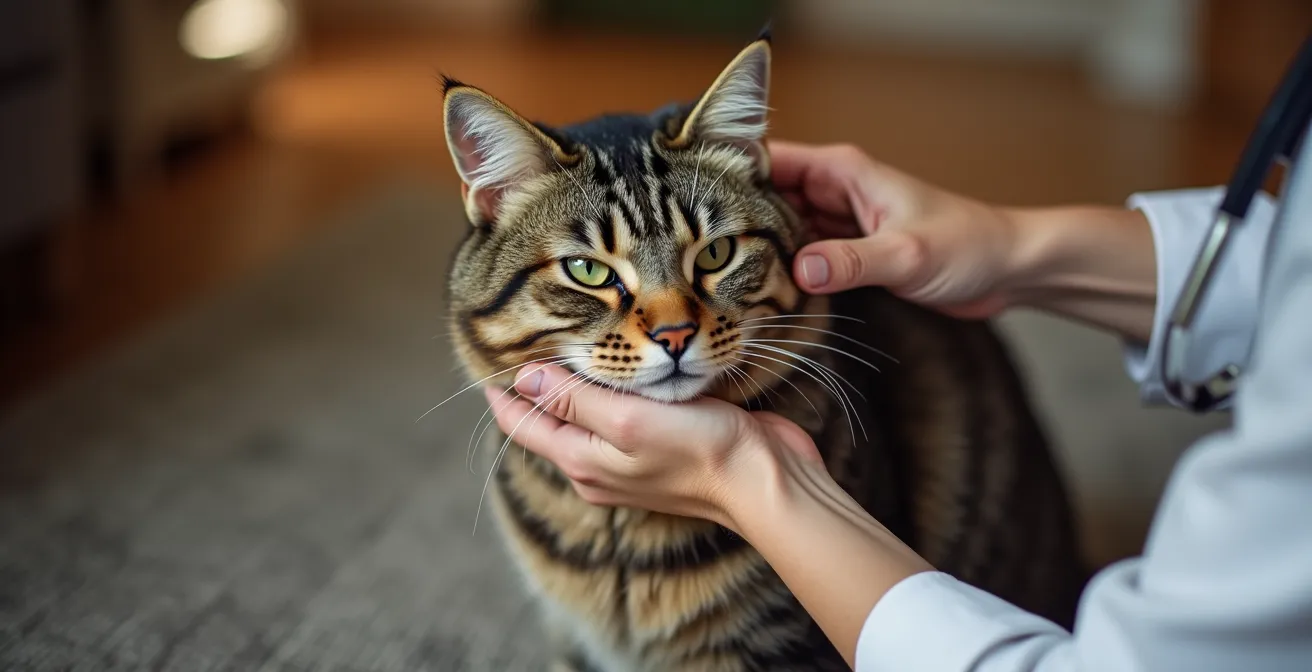
To make this monitoring systematic, especially during the high-risk winter months, integrate a weekly wellness check into your routine. This proactive approach allows you to catch subtle changes early and consult your veterinarian before minor dehydration escalates into a major kidney crisis.
Your Weekly Winter Wellness Checklist: Proactive Hydration Monitoring
- Perform Skin Turgor Test: Gently tent the skin at the scruff. It should return to normal within 1-2 seconds. A slower return can indicate dehydration.
- Check Gum Moisture: Gently press your finger to your cat’s gums. They should feel slick and wet, not tacky or dry.
- Monitor for New Water-Seeking Behaviors: Note any new interest in lapping from the toilet bowl, shower floor, or begging at sink faucets. These are classic signs of increased thirst.
- Track Daily Water Intake: Use a marker or tape on water bowls to get a baseline of daily consumption. A sudden drop or a dramatic increase can be a red flag.
- Watch for Subtle Lethargy: Track changes in behavior, such as a reluctance to jump to favorite perches or spending more time sleeping near heat sources, which can signal dehydration-induced fatigue.
How to Use Clumping Litter to Monitor Kidney Function Weekly?
One of the earliest and most reliable signs of declining kidney function is an increase in urination (polyuria). As the kidneys lose their ability to concentrate urine, the cat produces larger volumes of more dilute urine to flush out toxins. This change often occurs weeks or even months before other clinical signs like weight loss or vomiting appear. Fortunately, your cat’s litter box can serve as a powerful, non-invasive daily health monitor.
The “Canadian Clump Count Protocol” is a simple yet effective method used by proactive owners. By using a high-quality clumping litter, you can establish a baseline for your cat’s normal output. The strategy involves counting the number and estimating the size of urine clumps every day for one week to find an average. Once you have this baseline, any sustained increase of 20-30% or more in the number or size of the clumps is a significant red flag that warrants an immediate call to your veterinarian.
Case Study: The Canadian Clump Count Protocol
Canadian cat owners using popular clumping litter brands like Odour Buster and Intersand have successfully used this protocol for early kidney disease detection. By establishing a baseline clump count over one week (e.g., an average of 3-4 medium-sized clumps per day), they can then monitor for deviations. A consistent increase to 5-6 clumps per day, or a noticeable increase in the size of each clump, often precedes a formal diagnosis of CKD by several weeks, allowing for much earlier and more effective veterinary intervention.
This simple monitoring technique is especially critical given the high prevalence of the disease. A report from the Cornell Feline Health Center highlights that chronic kidney disease affects up to 80% of cats over the age of 15. Using the litter box as a diagnostic tool empowers you to be your cat’s first line of defense.
Travel Spray or Wall Plug-In: Which is Best for Vet Visit Anxiety?
Stress has a direct physiological impact on cats, and for a senior with fragile kidneys, the anxiety of a vet visit can be particularly detrimental. A stressed cat may refuse to eat or drink for hours, leading to a dangerous dip in hydration. Furthermore, stress hormones can temporarily elevate blood pressure, putting additional strain on the kidneys. Minimizing this anxiety is a crucial part of their overall wellness plan, especially when winter travel in Canada adds another layer of difficulty.
Feline pheromone products like Feliway offer a scientifically proven way to create a sense of calm. They come in two main formats, each suited for a different part of the vet visit journey. A wall plug-in diffuser is ideal for home use, creating a baseline of calm in the days leading up to the appointment. A travel spray, applied to the carrier and car 15 minutes before departure, creates a reassuring “calm bubble” during the stressful transit phase.
For Canadian owners, reducing winter travel altogether is an even better option. The rise of veterinary telehealth offers a revolutionary way to manage chronic conditions like CKD. Platforms like Vetster and Telus Health MyPet allow for virtual follow-ups, where a vet can assess hydration status through owner-performed checks and review monitoring logs (like your clump count data) without the cat ever leaving the warmth of home. This is a game-changer for senior pet care in harsh climates.
| Product Type | Best Use | Duration | Winter Benefit |
|---|---|---|---|
| Feliway Classic Spray | Carrier/car | 4-5 hours | Creates calm bubble in cold car |
| Feliway Optimum Plug-in | Home environment | 30 days continuous | Reduces pre-trip anxiety |
| Zylkene supplement | Oral calming | 24 hours | Non-sedating stress reduction |
Key Takeaways
- Dry indoor air from winter heating is a major, often overlooked, cause of dehydration in senior cats with kidney disease.
- A holistic “Hydration Ecosystem”—managing humidity, diet, and water sources—is more effective than any single tip.
- Proactive monitoring, especially tracking urine clumps in the litter box, provides the earliest warning of declining kidney function.
The Stream Water Risk: Why Letting Dogs Drink from Creeks Causes Giardia
Though the title refers to dogs and creeks, the underlying principle is critically important for Canadian cat owners in winter: outdoor water sources are uniquely hazardous. During winter, any puddle, snowmelt, or standing water outdoors is likely contaminated with toxic de-icing chemicals. Road salt and chemical antifreeze agents are extremely dangerous, and even a small amount can be fatal to a cat with compromised kidneys.
The Canadian Veterinary Medical Association issues strong warnings about these seasonal dangers. In their Winter Pet Safety Guidelines, they note that “road salt and de-icing chemicals in urban and suburban snowmelt are extremely toxic to a cat’s kidneys.” Your cat doesn’t even need to drink directly from a puddle; they can ingest these toxins simply by grooming their paws after walking on a treated sidewalk or driveway. It is imperative to wipe your cat’s paws with a warm, damp cloth immediately after any potential exposure.
This risk extends to your own property. Antifreeze, which has a sweet taste that can attract pets, must be stored securely in locked cabinets. A single teaspoon can cause acute kidney failure. The only safe water for your cat during the winter is fresh, clean water from an indoor source. Creating inviting indoor water stations away from exterior doors can also help prevent your cat from being tempted by tracked-in snowmelt.
How to Trick a Finicky Cat into Drinking 20% More Water Daily?
We’ve discussed the tools and tactics, but the ultimate success of your hydration ecosystem lies in a strategy called “Hydration Stacking.” This is the art of combining multiple, small sources of water throughout the day to reach a cumulative hydration goal. It’s about making hydration passive, frequent, and appealing, rather than relying on a single water bowl. This approach is the most effective way to outsmart a finicky senior cat’s low thirst drive.
Think of it as building a pyramid of hydration. The foundation is a high-moisture diet of wet food. The next layer is providing multiple, appealing water stations with fountains. The final, creative layer involves “treat” hydration. This can include adding a splash of tuna juice (in water, no salt) or low-sodium chicken broth to a water bowl, offering ice cubes made from broth, or even playing “winter fishing” games with frozen blueberries in a large bowl of water. Each of these small additions stacks up, contributing to their total daily intake without them even realizing it.
The goal is to weave hydration opportunities into every part of your cat’s day. A lick of broth here, a sip from a fountain there, and a moisture-rich meal all add up. This multi-pronged approach is far more effective than trying to force a cat to drink from a single source. It respects their natural behaviors and turns the act of staying hydrated from a chore into a seamless part of their daily life.
By building this comprehensive hydration ecosystem, you are giving your senior cat the best possible support against the challenges of kidney disease and the harsh Canadian winter. Your proactive efforts in managing their diet, environment, and water intake are the most powerful gift of health you can provide. Start today by implementing one or two of these strategies, and build from there to create a truly supportive home for your aging companion.