
Navigating a senior pet’s thyroid diagnosis can feel overwhelming, but effective management is a ‘therapeutic partnership’ between you and your veterinarian.
- Successful treatment relies on understanding why a cat becomes hyper (metabolic overdrive) vs. why a dog becomes sluggish (metabolic slowdown).
- Your daily choices—from how you give a pill to when you schedule a blood test—directly impact the medication’s effectiveness and your pet’s well-being.
Recommendation: Focus on consistency and observation. Your detailed feedback on your pet’s energy, appetite, and behaviour is the most valuable tool for tailoring their treatment plan.
As an endocrinology-focused veterinarian, I often see worried owners trying to understand sudden, baffling changes in their aging companions. Your once-sedate Golden Retriever might now refuse to get up for walks, or your elderly cat has started racing through the house at 3 a.m. like a kitten. It’s easy to dismiss these as simple signs of “getting old,” but they frequently point to a specific, treatable medical condition: a malfunctioning thyroid gland. This small, butterfly-shaped gland in the neck is the master controller of your pet’s metabolism, and when it goes wrong, the effects can be dramatic.
In senior cats, the gland typically becomes overactive, leading to hyperthyroidism. In dogs, particularly medium to large breeds, it’s the opposite; the gland slows down, causing hypothyroidism. Understanding this fundamental difference is the first step. While online articles provide basic symptom lists, they often miss the crucial context that empowers you, the owner. They don’t explain the ‘why’ behind the symptoms or the practical nuances of management that make all the difference. The key isn’t just knowing the diagnosis; it’s about building a therapeutic partnership with your vet, where your at-home observations become critical data for successful long-term care.
This guide moves beyond the clinical definitions. We will explore the day-to-day reality of managing these conditions in Canada, from making treatment choices that fit your budget to mastering the small details of medication administration that ensure success. We’re not just treating a number on a blood test; we’re restoring your pet’s quality of life.
This article will provide you with a clear roadmap. We will break down the distinct signs for cats and dogs, the timeline for treatment response, crucial decisions you’ll face, and the at-home monitoring skills that make you an indispensable part of your pet’s healthcare team.
Summary: Hypo vs. Hyperthyroid in Senior Pets
- Why Is Your Old Cat Suddenly Acting Like a Hyperactive Kitten?
- How Long Does It Take for Thyroid Meds to Stabilize a Dog’s Energy?
- Radioactive Iodine or Daily Pills: Which Choice Fits Your Lifestyle and Budget?
- The Pill Pocket Mistake That Reduces Thyroid Medication Absorption
- When to Re-Test T4 Levels: The Timeline That Prevents Overdose
- How to Measure Your Dog’s Body Condition Score Accurate at Home?
- Why Does the “Feline Facial Pheromone” Stop Scratching behavior?
- How Long Does It Take for Thyroid Meds to Stabilize a Dog’s Energy?
Why Is Your Old Cat Suddenly Acting Like a Hyperactive Kitten?
One of the most common and confusing signs I hear from owners of senior cats is, “He has more energy than he did five years ago!” This isn’t a miraculous second youth; it’s the classic calling card of feline hyperthyroidism. An overactive thyroid gland floods the body with excess thyroid hormone (T4), effectively putting your cat’s metabolism into overdrive. Their internal engine is running far too hot and fast. This is a prevalent issue, with research indicating that over 10% of cats older than 10 years develop hyperthyroidism.
This metabolic surge explains the paradoxical symptoms. Your cat loses weight despite a ravenous appetite because they are burning calories at an unsustainable rate. The constant state of stimulation leads to hyperactivity, increased vocalization (especially at night), and sometimes aggression or irritability. Their heart is working harder, which can lead to a rapid heart rate and high blood pressure if left untreated. The increased thirst and urination are due to the kidneys trying to cope with the metabolic changes. Recognizing that these are not isolated behavioral quirks but a cluster of symptoms driven by a single hormonal imbalance is the first step toward diagnosis and can significantly improve your cat’s long-term prognosis.
Differentiating these signs from normal aging is crucial. While an old cat might slow down, they shouldn’t be wasting away while constantly begging for food. A comprehensive checklist can help you and your veterinarian pinpoint the problem.
Action Plan: Differentiating Hyperthyroidism from Normal Aging
- Monitor weight: Document weekly weight changes. Hyperthyroid cats often lose weight despite an increased appetite.
- Track vocalization: Note if meowing becomes more persistent or urgent, especially at night.
- Observe grooming: Check for an unkempt, matted, or greasy coat, as they may neglect grooming.
- Measure water intake: Mark the water bowl’s level daily to objectively track increased drinking patterns.
- Count litter box visits: Document the frequency of urination to identify any significant increase.
How Long Does It Take for Thyroid Meds to Stabilize a Dog’s Energy?
For a dog diagnosed with hypothyroidism, the change is often gradual and insidious. You may notice subtle weight gain, a thinning coat, and a general lack of enthusiasm for activities they once loved. This is because their metabolic engine is sputtering. The thyroid gland isn’t producing enough T4 hormone, leading to systemic lethargy. The good news is that treatment with a synthetic thyroid hormone replacement, called levothyroxine, is typically very effective. But a common question from owners is: when will I see my old dog back?
You can expect to see initial improvements in your dog’s attitude and energy levels quite quickly, sometimes within the first one to two weeks of starting medication. However, full stabilization is a process. The skin and coat changes, such as hair regrowth and improved skin health, take much longer, often two to three months or more, as hair growth cycles are slow. According to the AAHA guidelines, initial monitoring is typically set for 4 weeks after starting therapy to check hormone levels and make any necessary dose adjustments. The goal is to restore a stable metabolic baseline.
This journey back to wellness can be visualized as a gradual return, mirroring the changing seasons. What begins as a small spark of their old personality will grow steadily as their body’s hormone levels normalize, eventually returning them to an energetic and healthy state.

As you can see in this progression, the journey from a lethargic state in the cold of winter to an active, happy dog in the summer is a step-by-step process. Patience and consistency with medication are key during this initial phase. Each week brings your dog closer to their optimal energy and health.
Radioactive Iodine or Daily Pills: Which Choice Fits Your Lifestyle and Budget?
When your cat is diagnosed with hyperthyroidism, you’ll face a significant decision about treatment. This is not just a medical choice, but a “lifestyle-centric choice” that involves your daily routine, your financial situation, and your long-term goals for your pet. In Canada, the main options include daily medication (methimazole), a prescription diet, and radioactive iodine (I-131) therapy. Each has distinct pros and cons regarding cost, convenience, and efficacy.
Methimazole, given as a pill or transdermal gel, is the most common starting point. It works by blocking the production of excess thyroid hormone. While the initial cost is low, it requires lifelong, often twice-daily administration and regular blood monitoring, making the cumulative cost significant. The prescription diet (Hill’s y/d) works by severely restricting iodine, the building block of thyroid hormone. It can be effective, but only if the cat eats *nothing* else, which can be a major challenge in multi-pet homes or for picky eaters. Radioactive iodine (I-131) is the gold standard. It involves a single injection that destroys the abnormal thyroid tissue, effectively curing the disease in about 98% of cases. The upfront cost is high, but there are typically no ongoing medication costs afterward.
A direct comparison of the financial commitment, based on typical Canadian veterinary costs, can be incredibly helpful in making this decision.
| Treatment Option | Initial Cost (CAD) | Monthly Cost | 5-Year Total | Success Rate |
|---|---|---|---|---|
| Radioactive Iodine (I-131) | $1,500-2,500* | $0 | $1,500-2,500 | 98% cure rate |
| Methimazole Pills | $125 (initial bloodwork) | $30-40 | $1,925-2,525 | Ongoing management |
| Transdermal Gel | $125 (initial bloodwork) | $60 | $3,725 | Ongoing management |
| Prescription Diet (y/d) | $50-100 | $80-120 | $4,850-7,300 | Variable |
Case Study: Radioactive Iodine (I-131) in Quebec
Specialized facilities like CENTREDMVET in Quebec are among the few centers offering I-131 treatment. The process reflects strict Canadian Nuclear Safety Commission standards, requiring a 7-10 day hospitalization period for the cat in an isolation ward after a single, anesthesia-free injection. While visits are not permitted due to radiation safety protocols, the center provides owners with daily updates on their pet’s progress. This highlights the logistical and emotional commitment required for the I-131 cure, which must be weighed against the daily commitment of lifelong pilling.
The Pill Pocket Mistake That Reduces Thyroid Medication Absorption
For dogs with hypothyroidism, daily levothyroxine is a lifelong commitment. While the routine may seem simple, how you administer the medication is critical for maintaining its effectiveness. The goal is to ensure absorption integrity—that the full dose gets into your dog’s bloodstream to do its job. Many well-intentioned owners unknowingly sabotage this process, most commonly by using the wrong kind of treat to hide the pill.
The single biggest mistake is giving levothyroxine with food, especially foods high in calcium or fiber. Pill pockets, cheese, or yogurt can significantly bind to the medication in the stomach, preventing it from being properly absorbed. This is why veterinarians are so insistent on a specific schedule. The ideal protocol is to give the medication on a completely empty stomach, at least one hour before a meal or three hours after. This allows the pill to dissolve and pass into the intestine for maximum absorption without interference.
Consistency is your other key to success. Administering the medication at the same time each day helps maintain stable hormone levels in the blood, preventing the peaks and valleys that can leave your dog feeling sluggish. Here are several best practices to optimize administration:
- Give medication on an empty stomach: Wait at least 1 hour before feeding or 3 hours after the last meal.
- Maintain consistent timing: Administer at the same time(s) every single day to create a stable metabolic baseline.
- Avoid calcium-rich treats: Do not hide pills in cheese, yogurt, or certain dairy-based pill pockets. If you must use a treat, opt for a very small, low-fiber, low-calcium option.
- Separate from other medications: Allow at least a 4-hour gap between thyroid medication and any supplements or antacids containing calcium, iron, or aluminum.
- Consider compounding alternatives: If pilling is a battle, ask your vet about options from Canadian compounding pharmacies, which can create flavored liquids or transdermal gels.
When to Re-Test T4 Levels: The Timeline That Prevents Overdose
Once your pet starts thyroid medication, the journey isn’t over. Regular blood monitoring is essential to ensure the dose is both effective and safe. For a hypothyroid dog, the goal is to raise T4 levels into the normal therapeutic range. For a hyperthyroid cat on methimazole, the goal is to lower them into that same range. Underdosing can leave symptoms unresolved, while overdosing can be dangerous, potentially flipping a hyperthyroid cat into a hypothyroid state, or causing anxiety and heart issues in a hypothyroid dog given too much medication.
The timing of these blood tests is not arbitrary. It’s a precise science based on when the medication reaches its highest level in the bloodstream. For this reason, veterinary guidelines specify that blood samples should be obtained 4-6 hours post-pill for an accurate peak concentration assessment. Scheduling your vet appointment around this “peak concentration timing” is a crucial part of your role in the therapeutic partnership. A blood test taken at the wrong time (a “trough” level, just before the next dose is due) can give a falsely low reading, potentially leading your vet to increase the dose unnecessarily.
This precise timing allows your veterinarian to make informed decisions about your pet’s dosage, protecting them from the risks of over- or under-treatment.
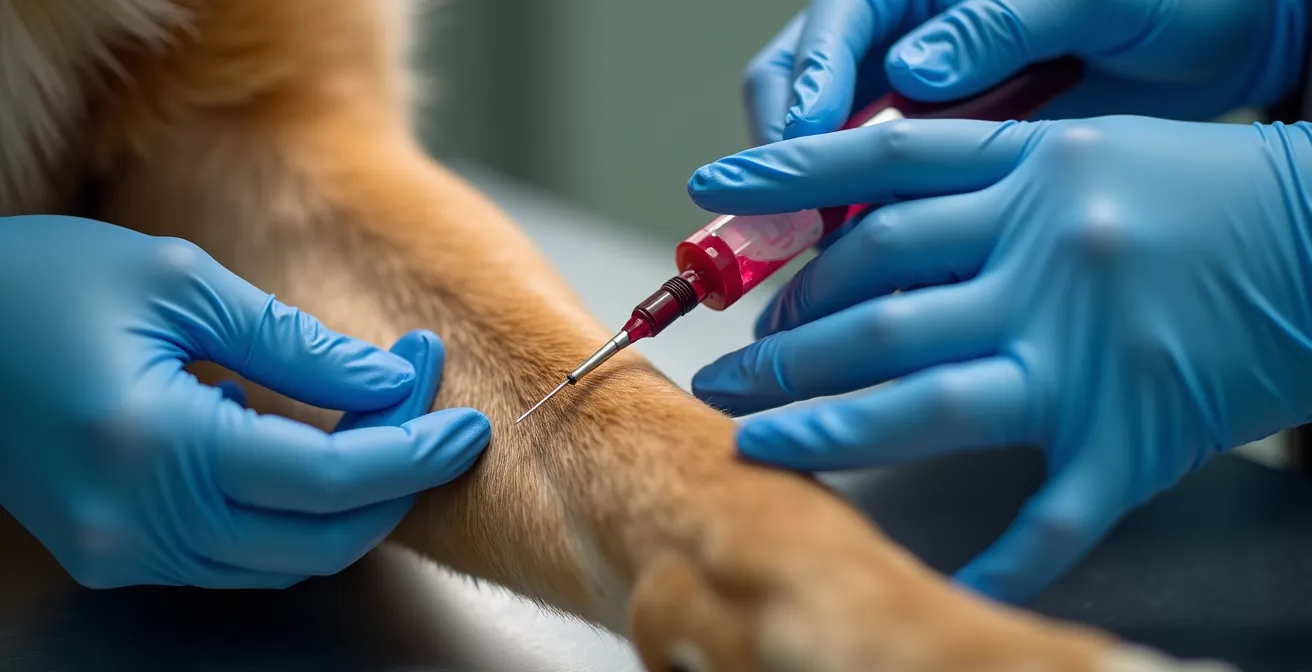
The monitoring schedule itself is also structured. After an initial period of more frequent testing to get the dose right, checks become less frequent once your pet is stabilized. However, any change in dose resets the clock, and senior pets may require more frequent checks as their bodies change with age.
- Initial Regulation: Test T4 levels every 2-4 weeks until the therapeutic range is achieved.
- First Stabilization Check: Retest at 4 weeks after starting medication.
- Dose Adjustment Period: Retest 4 weeks after any change in dosage.
- Ongoing Monitoring: Once stable, check every 6-12 months.
- Senior Pet Protocol: For pets over 10 years, consider more frequent checks (every 3-6 months) as a precaution.
How to Measure Your Dog’s Body Condition Score Accurate at Home?
While blood tests are the definitive measure of hormone levels, one of the most powerful tools for monitoring your hypothyroid dog’s progress is something you can do right at home: assessing their Body Condition Score (BCS). For hypothyroid dogs, weight management is a primary challenge. The disease slows their metabolism, making them prone to weight gain, which puts stress on their joints and organs. Tracking their BCS gives you and your vet tangible data on how well the treatment is working to normalize their metabolism.
The BCS is a 9-point scale that provides a more accurate assessment of your dog’s physical condition than simply looking at the number on a scale. It evaluates fat cover over the ribs, spine, and waist. You don’t need any special equipment—just your hands. A simple and effective method is the “Knuckle Test.” It uses the feel of your own hand as a guide to what your dog’s ribs should feel like.
Here’s how to perform the test accurately:
- The “Too Thin” Feel (BCS 1-3): Make a tight fist and run your fingers over your knuckles. They are prominent with very little padding. This is what the ribs of an underweight dog feel like.
- The “Ideal” Feel (BCS 4-5): Lay your hand flat, palm down. Feel your knuckles now. You can feel them, but they are gently padded. This is the goal for an ideal body condition. Your dog’s ribs should be easily felt with a slight fat cover.
- The “Overweight” Feel (BCS 6-9): Turn your hand over and feel the fleshy base of your thumb. It’s soft and padded, and you can’t feel the bone underneath. This represents an overweight or obese condition, where the ribs are difficult or impossible to feel.
This skill is especially valuable for pet owners in Canada, where vast distances can make frequent vet visits challenging. As organizations like the Ontario Veterinary College (OVC) emphasize for remote monitoring, an owner’s ability to provide accurate metrics like a BCS score during a telehealth appointment is invaluable. It helps the veterinarian make more informed decisions about medication adjustments between in-person visits, solidifying your role in the therapeutic partnership.
Why Does the “Feline Facial Pheromone” Stop Scratching behavior?
While it may seem unrelated to thyroid disease, managing your cat’s stress is a critical component of managing their overall health, especially for a senior cat with a chronic illness like hyperthyroidism. The constant state of metabolic overdrive can make cats anxious, irritable, and more sensitive to changes in their environment. The stress of daily pilling and frequent vet visits can further compound this anxiety, sometimes leading to unwanted behaviors like destructive scratching.
This is where synthetic feline facial pheromones come into play as a supportive therapy. The product mimics the natural pheromone that cats deposit when they rub their cheeks on objects (or on you). This is a “marking” behavior, but unlike urine marking, it’s a sign of comfort, security, and happiness. When a cat detects this facial pheromone in their environment, it sends a powerful signal to their brain that the space is safe and familiar. It’s essentially a chemical “all is well” message.
By using a diffuser or spray, you are enriching their environment with these calming signals. This doesn’t treat the underlying hyperthyroidism, but it can significantly lower their baseline stress level. A calmer cat is often easier to handle for medication, less likely to act out aggressively, and has a better overall quality of life. For a hyperthyroid cat whose world already feels chaotic internally, creating an external environment of consistent calm can make the entire management process smoother for both of you. It’s a non-invasive tool that supports the emotional well-being that is so intertwined with physical health.
Key Takeaways
- Thyroid disease presents differently: cats usually become hyperactive and lose weight (hyperthyroid), while dogs often become lethargic and gain weight (hypothyroid).
- Treatment is a long-term partnership. Success depends on consistent medication administration and precise timing for monitoring blood tests (4-6 hours post-pill).
- For cat owners in Canada, the choice between daily pills and a one-time radioactive iodine treatment is a major financial and lifestyle decision with distinct long-term costs.
How Long Does It Take for Thyroid Meds to Stabilize a Dog’s Energy?
After the initial four-to-eight-week stabilization period, your hypothyroid dog’s T4 levels should be within the therapeutic range, and you should see a marked improvement in their energy. But what does “stabilized” truly mean for the long term? It’s not about transforming your senior dog into a puppy again. It’s about re-establishing a consistent and predictable metabolic baseline—a new normal for their energy, appetite, and mood.
Your role in the therapeutic partnership now shifts from initial regulation to long-term observation. You are the one who sees your dog every day and can spot subtle shifts. Does their energy still dip in the afternoons? Have they started gaining a little weight back despite being on the medication? These are not signs of failure; they are data points. Factors like age, changing seasons, or other concurrent health issues can influence their metabolic needs over time, sometimes requiring minor dose adjustments.
This is where your at-home monitoring skills, like tracking their Body Condition Score (BCS), become so vital. A stable BCS and a consistent energy level are your best indicators of long-term success. If you notice a sustained change, it’s time to communicate that to your vet. Your detailed observations, combined with periodic blood work (typically every 6-12 months once stable), allow for the fine-tuning that keeps your senior dog feeling their best for years to come.
By understanding the ‘why’ behind the symptoms and the treatments, you transform from a worried observer into a confident, knowledgeable advocate for your senior pet’s health. This therapeutic partnership is the foundation of successful long-term management, ensuring your companion enjoys their golden years with comfort and vitality. For any concerns or to establish a personalized management plan, schedule a consultation with your veterinarian.