
For the skeptical pet owner, preventive care is not an emotional decision—it’s a financial one with a clear, positive return on investment.
- Treating a disease like parvovirus can cost over 25 times more than the complete vaccine series that prevents it.
- Senior blood panels can detect costly chronic diseases like kidney failure up to a year before symptoms appear, shifting expenses from catastrophic to manageable.
Recommendation: Stop viewing annual vet visits as a cost centre. Start treating them as a strategic tool for mitigating massive, unpredictable financial risk to your household budget.
For many Canadian pet owners, particularly those in cities like Vancouver, the annual vet bill feels like a mandatory expense with an unclear return. You take in a perfectly healthy dog or cat, and you walk out $600 lighter after an exam, some vaccines, and maybe blood work. The question is logical and pragmatic: is this a necessary investment in their long-term health, or is it a professionally packaged “cash grab” based on emotional appeals? The common advice to “do what’s best for your pet” often sidesteps this crucial financial analysis.
While the emotional benefits of a healthy pet are priceless, the financial costs of illness are very real and quantifiable. The standard discourse revolves around vague notions of “prevention being better than cure.” But what if we moved beyond the platitudes? What if we treated preventive care not as a health expense, but as a financial strategy? The key isn’t to ask if you can afford preventive care, but to analyze the data on whether you can afford not to. This is about risk mitigation and cost-benefit analysis, not just heartstrings.
This article will deconstruct the numbers. We will put the predictable, budgeted cost of prevention squarely against the data-proven, often catastrophic cost of emergency treatment. By examining specific scenarios—from parvovirus in puppies to the silent diseases of senior pets—we will demonstrate the tangible financial ROI of that annual $600 investment. This is the balance sheet approach to pet ownership, designed for the skeptic who trusts data over marketing.
To understand the true value, we will dissect the costs and benefits of specific preventive measures, analyze regional health risks across Canada, and provide a clear framework for making informed financial decisions about your pet’s health.
Summary: Is Preventive Care Worth the $600 CAD Annual Cost for Healthy Pets?
- Why Treating Parvovirus Costs 10x More Than the Vaccine Series?
- What Actually Happens During a 30-Minute Wellness Exam That Justifies the Fee?
- Lyme and Lepto: Which Optional Vaccines Are Essential for Ontario Cottagers?
- The Silent Killer That Senior Blood Panels Detect 6 Months Before Symptoms
- How to Budget for Vet Care: The 1% Rule for Canadian Pet Owners
- Why Is the First Exam Date Crucial for Your Insurance Waiting Period?
- Why Do Dogs in British Columbia Need Different Vaccines than in Quebec?
- How to Get Insurance Coverage for a Rescue Dog with “Unknown History”?
Why Treating Parvovirus Costs 10x More Than the Vaccine Series?
The most compelling financial argument for preventive care begins with Canine Parvovirus, a highly contagious and deadly virus affecting puppies. A skeptic might question the necessity of a multi-shot vaccine series for a puppy that appears perfectly healthy. However, the cost-benefit analysis is not just clear; it’s staggering. The decision to vaccinate is a direct hedge against a probable five-figure veterinary bill.
The initial investment in prevention is minimal. A complete parvovirus vaccine series is a predictable, budgetable expense. The alternative is a financial gamble with devastating odds. If an unvaccinated puppy contracts parvovirus, treatment is an intensive, expensive, and emotionally draining ordeal involving hospitalization, intravenous fluids, antibiotics, and constant monitoring. There is no guarantee of survival, but there is a guarantee of a significant financial outlay.
The numbers speak for themselves. The cost of treating this preventable disease starkly contrasts with the modest price of vaccination. This isn’t an emotional appeal; it is a straightforward calculation of financial risk. Opting out of the vaccine is akin to declining fire insurance on your home—a small saving that exposes you to catastrophic financial loss.
This comparative data, detailed in a recent analysis from MetLife Pet Insurance, provides a clear financial breakdown. It transforms the vaccination decision from a simple “health choice” to a fundamental lesson in risk management.
| Service | Prevention Cost | Treatment Cost |
|---|---|---|
| Initial vaccine series (3 doses) | $75-$100 | N/A |
| Diagnostic testing (ELISA) | N/A | $40-$100 |
| Blood work | N/A | $130 |
| Daily hospitalization | N/A | $500-$2,000/day |
| One night hospital stay | N/A | $860 |
| X-rays/ultrasound | N/A | $150-$300 |
| Total typical cost | $75-$100 | $500-$2,600+ |
Ultimately, the parvovirus vaccine is not just a medical procedure; it is one of the highest-yield financial instruments available to a new pet owner, offering protection from a multi-thousand-dollar liability for less than the cost of a few bags of premium dog food.
What Actually Happens During a 30-Minute Wellness Exam That Justifies the Fee?
To a skeptic, the annual wellness exam can seem like the most ambiguous charge on a vet bill. The pet often appears healthy, and the 30-minute consultation can feel like a costly conversation. However, the true value of this exam is not in treating sickness, but in gathering baseline data. This data is the foundation of all future medical and financial decisions regarding your pet.
A thorough wellness exam is a systematic, 12-point physical audit. The veterinarian assesses everything from the eyes and ears to the heart, lungs, abdomen, and joints. They are not just “petting your dog”; they are palpating organs for abnormalities, listening for heart murmurs that could signal future cardiac disease, and assessing body condition to prevent the long-term costs of obesity-related illnesses like diabetes and arthritis. According to typical Canadian veterinary pricing, this exam costs between $100-$200, a fee that establishes a documented, healthy baseline.
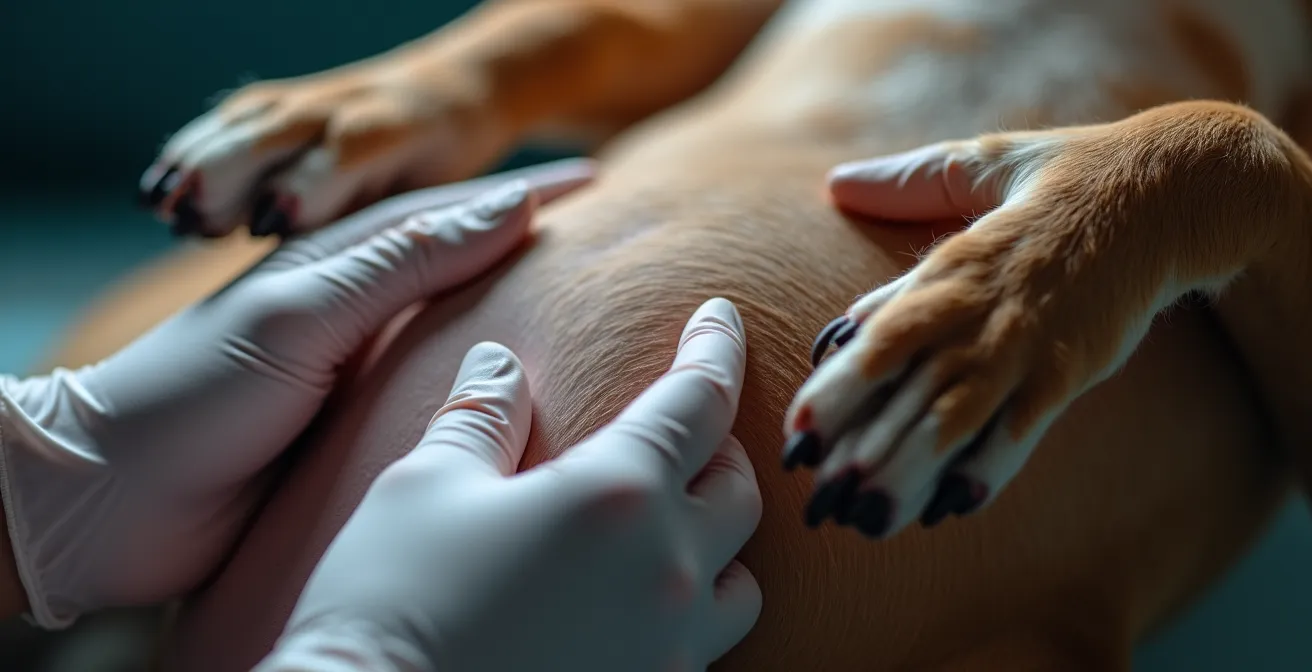
This baseline is your most powerful tool. When a subtle change is noted a year later—a slight heart arrhythmia, a new lump, or weight loss—it can be compared against this historical data. Early detection translates directly to lower treatment costs and better outcomes. Furthermore, this documented “clean bill of health” is crucial for pet insurance, proving that a condition that develops later was not pre-existing.
Your Action Plan: Maximize the Value of Your Vet Exam
- Inquire about customizing senior blood panels by removing tests irrelevant to your pet’s breed or history to manage costs.
- Request a formal body condition score and ask for specific dietary recommendations, including calorie counts, for weight management.
- Discuss your pet’s specific lifestyle (e.g., city apartment vs. farm) to determine if any vaccine exemptions are possible based on low exposure risk.
- Ask for a printed or emailed copy of the exam notes to serve as your pet’s baseline health record for insurance purposes.
- Before agreeing to any recommended follow-up tests or procedures, always request a detailed cost estimate in writing.
The fee for a wellness exam is not for a simple chat. It is a payment for the creation of a critical dataset that provides financial leverage against future, far more expensive, health problems.
Lyme and Lepto: Which Optional Vaccines Are Essential for Ontario Cottagers?
The concept of “core” versus “non-core” vaccines often creates confusion and skepticism. Why pay for an “optional” vaccine? The answer lies in a data-driven risk assessment based on geography and lifestyle. For pet owners in Canada, particularly those who frequent specific regions like Ontario’s cottage country, this is not an abstract exercise. It’s a calculated decision to mitigate a localized, high-probability threat.
Lyme disease, transmitted by ticks, and Leptospirosis, a bacterial infection spread through the urine of wildlife, are prime examples. A dog living in a downtown Vancouver condo has a very different risk profile than a dog that spends weekends swimming in lakes and running through the woods near Muskoka. For the latter, these “optional” vaccines become essential components of a sound financial and health strategy.
The cost of the Lyme vaccine, for instance, is approximately $30-$65 per dose. Treatment for Lyme disease, however, involves weeks of antibiotics and can lead to chronic, expensive-to-manage conditions like kidney disease or joint inflammation. Leptospirosis is even more severe, often requiring aggressive hospitalization and carrying a high risk of fatality or permanent kidney damage, with costs quickly running into the thousands. As veterinary guidelines confirm, the disease is endemic in southern Quebec and eastern Ontario, making the risk tangible for many Canadians.
Therefore, the decision to vaccinate is not arbitrary. It’s based on a simple formula: risk exposure multiplied by potential cost of illness. For an Ontario cottager, the high risk of exposure makes the small, fixed cost of the vaccine a highly logical investment to prevent a high-cost, high-stress medical event. It is a targeted application of preventive funds based on clear, regional data.
This approach moves beyond a one-size-fits-all checklist and into the realm of personalized risk management, ensuring that every dollar spent on prevention is targeted at a probable and significant threat.
The Silent Killer That Senior Blood Panels Detect 6 Months Before Symptoms
For the owner of a healthy-looking senior pet, the recommendation for an annual blood panel—often costing between $125 and $300—can feel like the ultimate upsell. Why run expensive tests on an animal with no symptoms? The answer is the core principle of preventive finance: detecting the “silent killers” like chronic kidney disease (CKD) or hypothyroidism before they manifest clinically. This early detection is the single most effective way to turn a potentially catastrophic expense into a manageable one.
A senior blood panel is not a random search; it is a targeted analysis of key biomarkers. For example, the SDMA (Symmetric Dimethylarginine) test can detect a decline in kidney function months or even years before the classic symptoms of thirst and weight loss appear. By the time a pet shows signs of CKD, it has often lost up to 75% of its kidney function, and treatment is focused on costly crisis management. Early detection via SDMA allows for simple, inexpensive interventions like a diet change that can slow the disease’s progression and delay the onset of expensive symptoms for years.
The financial leverage is immense. A $200 blood panel can defer or prevent years of monthly costs for prescription diets, subcutaneous fluids, and frequent vet visits associated with late-stage disease management. The table below illustrates the stark financial contrast between early detection and late-stage treatment for common senior pet diseases.
This data from PetMD clearly shows how a small, upfront investment in diagnostics provides a massive return by converting a high-cost, acute care scenario into a low-cost, long-term management plan.
| Test Component | What It Detects Early | Cost of Test | Cost if Undetected |
|---|---|---|---|
| SDMA (kidney) | Kidney disease 6-12 months early | Included in $125-300 panel | $300+/month for CKD management |
| ALT (liver) | Liver dysfunction | Included in panel | $500-1000/month for liver disease |
| T4 (thyroid) | Hypothyroidism | $70-200 or included | $30/month medication + complications |
| Glucose | Diabetes | Included in panel | Over $100/month for insulin & monitoring |
A senior blood panel is not a test for sickness; it is a financial forecasting tool. It allows you to address the negative compounding of silent disease with minimal investment, protecting both your pet’s health and your financial stability.
How to Budget for Vet Care: The 1% Rule for Canadian Pet Owners
Accepting the financial logic of preventive care is the first step. The second is creating a pragmatic, sustainable budget to handle both predictable wellness costs and unpredictable emergencies. For many Canadians, this means choosing between pet insurance and a dedicated savings fund. A disciplined approach is essential to avoid being forced into making difficult decisions under financial duress.
A useful guideline is the “1% Rule.” This involves estimating your pet’s total lifetime cost (e.g., purchase/adoption fee + 10-15 years of basic upkeep like food and grooming) and aiming to have 1% of that total available in a dedicated emergency fund at all times. This creates a buffer for unexpected events that fall outside of routine care. For example, if a pet’s estimated lifetime cost is $30,000, your target emergency fund would be $3,000.
Canadian owners have several tools to build this fund. High-interest savings accounts from institutions like EQ Bank or Wealthsimple are excellent for setting aside vet funds, allowing the money to grow while remaining liquid. The alternative is pet insurance. According to current Canadian pet insurance data, the average monthly premium is $89.18 for dogs and $45.86 for cats. This is a fixed, predictable cost that protects against catastrophic expenses, but it’s important to compare the lifetime cost of premiums against your potential for self-funding. For large, unexpected bills, payment plan services like Affirm (which acquired PayBright in Canada) are increasingly accepted by veterinary clinics, offering another tool to manage cash flow during a crisis.
Whether you choose to self-insure through a dedicated savings account or purchase a formal insurance policy, the principle is the same: you are converting a potentially massive, unknown future cost into a small, predictable monthly expense or savings goal. This proactive financial planning is the cornerstone of responsible pet ownership.
Ultimately, the method you choose is less important than the discipline you apply. A well-funded plan, whether through savings or insurance, ensures that medical decisions are always driven by what is necessary, not by what you can afford in the heat of the moment.
Why Is the First Exam Date Crucial for Your Insurance Waiting Period?
For pet owners who opt for insurance, understanding the mechanics of waiting periods is critical to maximizing the policy’s value and avoiding claim denials. A common point of failure is a misunderstanding of how “pre-existing conditions” are defined. This is where your pet’s very first veterinary exam—ideally conducted immediately upon adoption or purchase—becomes your most important financial document.
Pet insurance policies in Canada do not cover pre-existing conditions. A condition is typically deemed pre-existing if it showed signs or symptoms before the policy’s start date or during the initial waiting period. These waiting periods vary by provider and by condition type. For instance, major Canadian insurers like Trupanion, Petsecure, and Desjardins have waiting periods for illnesses that can range from 14 to 30 days. Any illness that appears during this window will be permanently excluded from coverage.
This is why the initial vet exam is so crucial. By having a veterinarian perform a thorough exam and document that your pet is healthy *before* the insurance policy’s waiting period begins, you create an official, time-stamped record of their baseline health. This document, known as a “clean bill of health,” is your primary evidence to contest a claim denial based on a pre-existing condition accusation. Without this documented baseline, an insurer might argue that a condition that appeared on day 31 was actually brewing for months.
Some insurance plans offer a strategic advantage. For example, certain add-ons for preventive care may have no waiting periods at all, meaning coverage for wellness services begins immediately. This allows you to get that crucial baseline exam covered while the waiting period for accident and illness coverage is still running. It’s a way to use the policy to establish the very documentation needed to protect your future claims.
Think of your first vet visit not as a health check, but as the moment you legally establish your pet’s insurable condition. It’s a small investment of time and money that secures the value of every future premium you will pay.
Why Do Dogs in British Columbia Need Different Vaccines than in Quebec?
The idea that all dogs in Canada should receive the same set of vaccines is a common but flawed assumption. A truly data-driven approach to preventive care must account for regional variations in disease prevalence. The specific environmental risks in British Columbia are demonstrably different from those in Quebec or Ontario, and a pet’s vaccination protocol should reflect this localized data to maximize value and avoid unnecessary procedures.
Core vaccines, such as DA2PP (Distemper, Adenovirus, Parainfluenza, Parvovirus) and Rabies, are recommended for virtually all dogs across Canada due to the severity and widespread nature of these diseases. However, the “non-core” or lifestyle vaccines are where regional strategy becomes paramount. A dog in British Columbia, for example, may be at higher risk for “salmon poisoning disease,” a parasitic infection unique to the Pacific Northwest. While heartworm is a concern, the prevalence is much lower than in other parts of the country.
In contrast, a dog living in southern Quebec or Ontario faces a much higher probability of encountering ticks carrying Lyme disease and wildlife carrying Leptospirosis. For these dogs, the Lyme and Lepto vaccines are not “optional” luxuries; they are critical risk-mitigation tools. The prevalence of heartworm is also significantly higher in these regions, making monthly prevention a non-negotiable part of the annual health budget.
This table, based on an analysis of regional risks, highlights how vaccination needs and costs can differ across provinces, even though the base price for core vaccines is similar.
| Province | Core Vaccines | Key Regional Risks | Typical Annual Vaccine Cost |
|---|---|---|---|
| British Columbia | DA2PP, Rabies | Salmon Poisoning, Giardia | $120-$200 |
| Quebec | DA2PP, Rabies | High Heartworm, Leptospirosis | $120-$200 |
| Ontario | DA2PP, Rabies, Lyme, Lepto | Highest Lyme & Lepto prevalence | $150-$300 |
A savvy pet owner doesn’t just ask “what vaccines does my dog need?” They ask, “what diseases is my dog most likely to be exposed to right here, where we live and play?” This targeted approach ensures every dollar spent on prevention provides the maximum possible ROI by addressing the most probable threats.
Key Takeaways
- The cost of prevention is a fixed, predictable line item in your budget; the cost of treatment is an unpredictable, potentially catastrophic financial event.
- Baseline data from wellness exams and blood panels is a financial tool that provides leverage against future costs and insurance claim disputes.
- A personalized risk assessment based on your specific Canadian region (e.g., BC vs. Ontario) ensures your prevention budget is allocated to the most probable threats.
How to Get Insurance Coverage for a Rescue Dog with “Unknown History”?
Insuring a rescue dog presents a unique financial challenge. The phrase “history unknown” on adoption paperwork is a major red flag for insurance providers, who may use it as a blanket justification to deny future claims by classifying almost any condition as pre-existing. However, with a proactive and strategic approach, you can build a case for comprehensive coverage and secure your financial future.
The most critical step is to immediately establish a known history. This process should begin *before* you even finalize the adoption, if possible. Investing ~$100 in a pre-adoption vet exam can provide an initial health baseline and uncover any obvious issues that could become expensive problems later. Once the dog is legally yours, schedule a comprehensive “new pet” exam immediately. This is not the time to save money; this is the moment you create the foundational document for all future insurance claims.
During this exam, the veterinarian will document the dog’s condition from head to tail. This record serves as the “starting point” of your dog’s known medical history. Submit these exam notes to your chosen insurance provider right away and ask them to formally review the file. Request, in writing, a list of any conditions they will be placing exclusions on. This transparency is crucial. As a testament to the growing acceptance of insuring rescues, some companies are very accommodating.
At Spot Pet, there are no age limits for pets to get insurance.
– Spot Pet Insurance, Official pet insurance policy information
If an exclusion is placed (e.g., for a minor skin irritation noted at the first exam), your work is not over. If the pet remains symptom-free for a period of 12-18 months, you can petition the insurer to have that specific exclusion removed. This requires diligent record-keeping but can result in a fully comprehensive policy for your rescue pet, effectively erasing their “unknown history” from a financial perspective.
By investing in upfront documentation and maintaining clear communication with your insurer, you can transform a high-risk rescue into a fully-protected member of your family. Your first vet bill is not an expense; it is the price of creating a history where none existed.
Frequently Asked Questions on Canadian Pet Insurance
How do waiting periods differ between Canadian insurers?
Major providers like Trupanion, Petsecure, and Desjardins have varying waiting periods for accidents (which can be from 0 to 5 days) and illnesses (typically ranging from 14 to 30 days). It is critical to check the specific policy details before enrolling.
What happens if my pet gets sick during the waiting period?
Any condition that shows symptoms or is diagnosed during the official waiting period is considered pre-existing by the insurance company and will be permanently excluded from your coverage for the lifetime of the pet.
Can I expedite the waiting period with a vet exam?
While you generally cannot eliminate the waiting period entirely, some insurers may offer to waive or reduce it for specific conditions if you provide them with a “clean bill of health” from a comprehensive veterinary examination performed shortly before or after enrollment.